

Production teams run validation cycles to prove their cure process works, but proving minimum temperature was reached on this specific unit creates a documentation gap most operations can’t close.
The validation documentation challenge in curing processes
Process validation requires proof that minimum temperature thresholds were reached. You’ve mapped your ovens. You’ve qualified your equipment. Your data loggers track ambient conditions throughout every cycle.
But here’s the question quality audits increasingly ask: How do you know this particular unit reached cure temperature?
Oven controllers monitor chamber temperature, not individual product surface temperature. Batch sampling validates the process design but doesn’t document every unit. When a customer specification demands temperature exposure proof or a regulatory inspection asks for unit-level evidence, most operations point back to process controls rather than product-level documentation.
The gap isn’t about process capability. Validated processes consistently deliver proper cure conditions. The challenge is documentation: demonstrating temperature achievement at the unit level when ambient monitoring alone doesn’t create that record.
Common misconception: Visual temperature indicators are meant to replace validated process controls.
Reality: Thermax indicators supplement existing validation frameworks by creating a visual record at the product surface level. Your thermocouples, data loggers, and oven controls remain your primary monitoring tools. Indicators add a layer of unit-level documentation that supports validated processes.
How irreversible temperature indicators function in process validation
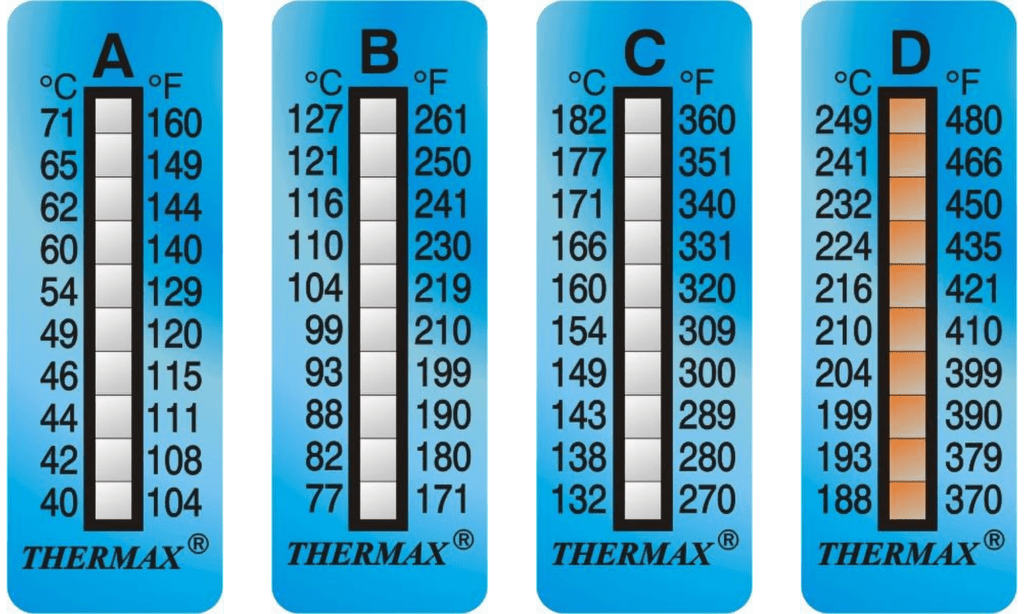
Thermax indicators show a permanent color change of the highest temperature achieved. The chemistry is calibrated to precise temperature points relevant to curing processes, available across ranges that align with common cure requirements.
The critical distinction: the indicator responds to actual product surface temperature, not ambient oven temperature.
The color change is permanent. It doesn’t reverse when the temperature drops. The visual record can remain with the unit through production, quality control, shipment, and even customer receipt.
This creates supplemental documentation. Temperature mapping studies, installation qualification, and operational qualification remain foundational. Indicators also add ongoing visual confirmation between formal revalidation cycles.
Operator workflow with temperature indicator reads
Documentation requirements mean nothing if the operational workflow isn’t clear. Here’s what happens in practice:
Apply the indicator to the product or rack before the cure cycle begins. Position matters. Indicators document temperature at their specific location, so placement should represent the area you need to verify.
Check for color change at process completion. This is a binary visual read: changed or not changed. Good read or bad read.
Document the visual response in batch records. Many operations photograph the indicator to create a permanent digital record that accompanies batch documentation through quality review and customer shipment.
When an indicator shows no color change, quarantine the unit or batch. Document the observation. Investigate whether a process deviation occurred: loading issue, oven malfunction, or indicator application error. Follow your existing nonconformance procedures.
The visual signal supports go/no-go decisions at production hand-offs. A quality control inspector doesn’t need to reference process data. The indicator provides immediate visual confirmation that supports batch release decisions.
Industry applications for cure validation
Automotive operations use indicators for leather curing and paint processes where surface temperature achievement affects quality outcomes. Automotive leather case studies demonstrate how visual confirmation supports consistent cure documentation across production shifts.
Aerospace manufacturers apply indicators to composite curing processes where documented temperature exposure becomes part of permanent aircraft records.
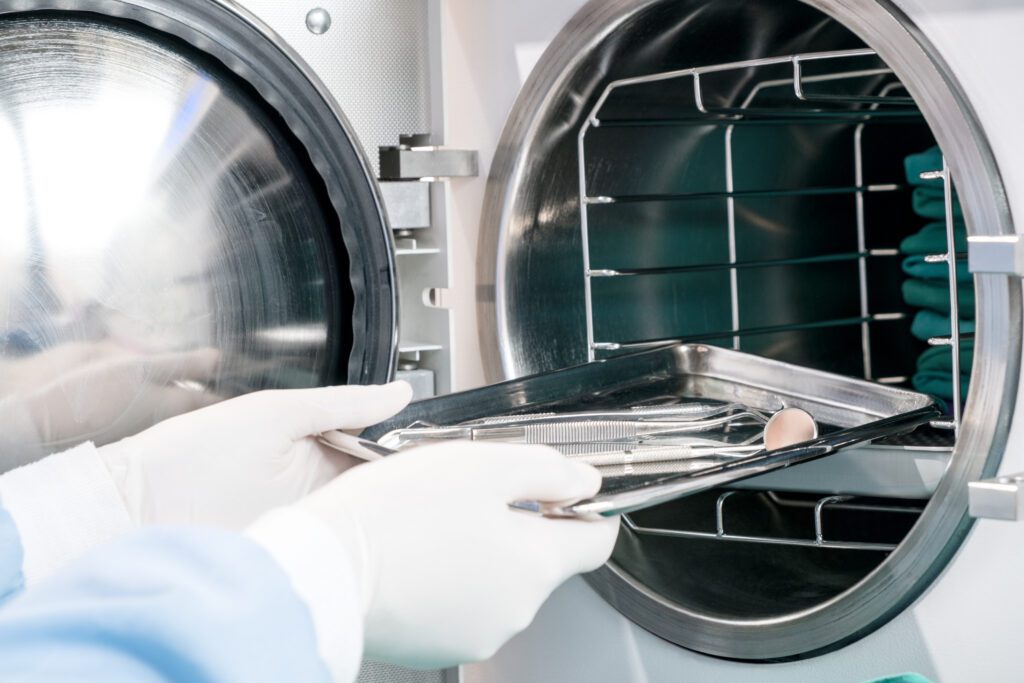
Medical device operations integrate indicators into sterilization validation and absorbable suture processing, where unit-level temperature documentation supports regulatory submissions and customer specifications.
Manufacturing operations confirm powder coating cure, adhesive bonding, and heat treatment verification when customer requirements demand temperature exposure proof beyond process capability data.
Food processing uses visual indicators to confirm pasteurization and cooking temperature achievement when Hazard Analysis and Critical Control Points (HACCP) documentation requires unit or batch-level records.
The common thread: operations where minimum temperature achievement must be documented at the unit or batch level, not just through process monitoring.
Integration with existing validation frameworks
Indicators supplement validated process controls. They don’t replace temperature mapping or qualification studies. Your validation master plan doesn’t change. Your critical process parameters remain defined by your process development work.
What indicators add: ongoing process monitoring between formal revalidation cycles. Visual confirmation that supports batch release decisions. Integration into existing batch documentation systems, inspection forms, and digital quality records.
Photography creates a permanent digital record for audits and customer documentation. When a medical device customer requests proof that their custom implant batch reached minimum sterilization temperature, you can provide process data and a photograph of the indicator that traveled with that specific batch.
Indicators also help identify process variations that warrant investigation. When one rack consistently shows a missed color change compared to others in the same oven, you’ve identified a potential loading issue or airflow restriction worth addressing before it becomes a quality event.
When visual indicators add operational value
Visual indicators add value when unit-level documentation strengthens validation evidence, when customer specifications explicitly require temperature exposure proof, or when process variations make sampling insufficient to document every unit’s temperature history.
Counterargument: “Our process capability is excellent. Adding indicators questions our validation work.”
Response: Process capability and documentation requirements are separate considerations. Strong process control demonstrates outstanding validation. But when a customer’s incoming inspection procedure requires visual temperature confirmation, or when an audit asks how you document individual unit exposure, capability data doesn’t answer the documentation question. Indicators address documentation requirements without implying inadequate process control.
The decision comes down to documentation requirements and operational needs.
Implementation steps for temperature indicators in curing processes
Identify which cure processes would benefit from unit-level temperature documentation. Customer-facing operations and regulated processes typically show the clearest value.
Select the Thermax temperature point based on your minimum cure requirement. For curing applications where achieving minimum temperature is essential and exceeding it is acceptable, you might select a single-point indicator that confirms the threshold was met. Alternatively, multi-level Thermax indicators show a progressive response across multiple temperature points, revealing not just whether minimum temperature was reached but how high the actual temperature went. This additional information helps evaluate product performance and understand temperature distribution within your curing area, particularly when investigating process variations or validating oven loading configurations.
Run parallel validation: indicators alongside existing controls. Document integration into batch records and quality control procedures. This parallel approach demonstrates how indicators supplement rather than replace your current monitoring.
Train operators on visual reads and documentation protocols. The workflow is straightforward, but consistent execution requires clear procedures and visual reference standards.
Review indicator data during routine process reviews. Patterns in indicator response can reveal process insights that support continuous improvement.
Next step: Contact SpotSee for technical specifications and application guidance specific to your curing process requirements. Temperature point selection and placement recommendations depend on your specific process parameters and documentation objectives.
—
You might also like:


