

Key Takeaways
- GLP-1 storage temperature: Compounded GLP-1 medications must be refrigerated between 2°C and 8°C (36°F–46°F). Exposure above 8°C risks degrading the peptide structure and reducing efficacy.
- Cold chain shipping is the end-to-end process of maintaining that temperature range from the pharmacy through to the patient’s door, packaging, transit, and last-mile delivery all included.
- Temperature excursions during medicine shipping are a leading cause of pharmaceutical waste and patient safety incidents in direct-to-patient pharmacy programs.
- Time over temperature indicators (TTIs) such as WarmMark QR show not just whether a threshold was breached, but how long, giving pharmacists and patients the evidence to make an informed decision about medication viability.
- Compliance with USP, FDA, and IATA standards is a legal and quality requirement for pharmacies shipping temperature-sensitive products across state lines or internationally.
The rapid growth of compounded GLP-1 receptor agonist prescriptions, including formulations of semaglutide and tirzepatide dispensed directly to patients, has placed new pressure on compounding pharmacies to master one of the most demanding areas of pharmaceutical logistics: cold chain shipping for temperature-sensitive medications.
Unlike medications that can be shipped at room temperature, GLP-1 medications require continuous refrigeration throughout their journey from the pharmacy bench to the patient’s refrigerator. A single temperature excursion, whether from a delayed delivery, a hot vehicle, or improper packaging, can compromise the drug’s peptide structure and render it ineffective or potentially unsafe.
This article covers the core questions pharmacies and logistics teams need to answer: what GLP-1 storage temperature requirements look like, what cold chain shipping means in practice, the regulatory compliance obligations involved, and the tools available to verify that a shipment’s integrity was maintained from pickup to delivery.
What Temperature Should GLP-1 Be Stored At?
|
What temperature should GLP-1 be stored at?
Compounded GLP-1 receptor agonist medications, including semaglutide and tirzepatide formulations, must generally be stored and shipped refrigerated, at temperatures between 2°C and 8°C (36°F and 46°F). They must not be frozen. This temperature range is required because GLP-1 medications are peptide-based biologics. Peptides are inherently temperature-sensitive: heat accelerates molecular degradation, breaking down the active peptide chains and reducing the product’s biological activity. A medication that looks identical before and after a temperature excursion may have lost a measurable proportion of its potency, with no visible sign that this has occurred. Key GLP-1 storage temperature principles for compounding pharmacies and couriers:
For medicine shipping purposes, the practical consequence of the 2°C–8°C requirement is that every element of the logistics chain, from the packing bench to the carrier’s van to the patient’s front door, must maintain that range for the full duration of transit. |
What Is Cold Chain Shipping?
|
What is cold chain shipping? Cold chain shipping is a temperature-controlled logistics process that maintains a product within a defined temperature range from the point of manufacture or dispensing through to the end recipient, without interruption. The word “chain” is deliberate: every link in the process must hold. For compounded GLP-1 medications shipped directly to patients, the cold chain encompasses:
For compounding pharmacies, a fully managed cold chain shipping solution is both a patient safety measure and a regulatory requirement. Without documented evidence that the cold chain was maintained, neither the pharmacy nor the patient can be certain the medication arrived safe and effective. |
Why Temperature Control Matters for GLP-1 Medicine Shipping
The stakes in medicine shipping for GLP-1 medications are higher than for many other pharmaceutical categories, for several reasons:
- Peptide degradation is invisible. Unlike a product that visibly spoils, a temperature-compromised GLP-1 medication may appear identical to an intact one. Patients have no way to detect degradation without laboratory testing, making prevention the only reliable safeguard.
- Patient populations are vulnerable. GLP-1 medications are often prescribed to patients managing obesity, type 2 diabetes, or related metabolic conditions. Receiving an ineffective product can affect blood glucose management, weight loss outcomes, and patient confidence in the treatment.
- Direct-to-patient shipping removes pharmacy oversight at delivery. In a traditional dispensing model, a pharmacist verifies the product at handoff. In direct-to-patient shipping, temperature monitoring indicators placed inside the shipment serve as the proxy for that oversight.
- Regulatory exposure is significant. Pharmacies that ship temperature-sensitive compounded medications without adequate cold chain documentation face compliance risk under USP, FDA, and state Board of Pharmacy frameworks.
Temperature-Sensitive Product Shipping Tips for Compounding Pharmacies
Effective cold chain shipping solutions for GLP-1 and other temperature-sensitive medications rest on five practical principles:
1. Use Validated Insulated Packaging
Validated pharmaceutical packaging is tested to confirm how long it maintains the required temperature range under defined ambient conditions. Select insulated containers specifically validated for the 2°C–8°C range and for the expected transit duration, accounting for seasonal temperature extremes. The refrigerant load must also be validated; using too few gel packs is a common cause of cold chain failures in the summer months.
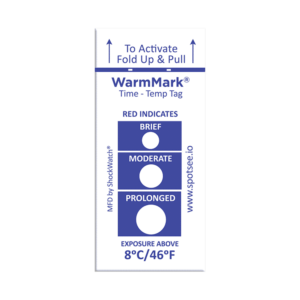
The Cost-Effective Solution: SpotSee’s WarmMark 8°C/46°F
2. Include a Time Over Temperature Indicator in Every Shipment
A time over temperature indicator (TTI) placed inside the package provides the patient and the pharmacy with objective, third-party evidence of the shipment’s thermal history. The WarmMark QR 8°C/46°F indicator is designed specifically for this application. It activates irreversibly when the temperature exceeds 8°C, and its QR code can be scanned at any point in the cold chain to instantly log the excursion data – giving the pharmacy a digital, time-stamped record to determine whether the product should be considered compromised before the patient uses it.
The WarmMark range is accurate to ±1°C / ±2°F, has a two-year shelf life, and is single-use, a low-cost addition to every shipment that provides high-value evidence of cold chain integrity throughout the entire transit period.
3. Select Overnight or Expedited Shipping
Transit time is directly related to the risk of cold chain failure. The longer a package is in transit, the greater the chance of an excursion, particularly during last-mile delivery in warm climates or during peak summer periods. Overnight or next-day expedited services significantly reduce this window. Ensure the selected courier provides package-level tracking so both the pharmacy and patient can monitor progress and identify delays early.
4. Communicate Clearly with the Patient
Patient-side handling is the hardest link in the cold chain to control. Best practices for medicine shipping to patients’ homes include:
- Notifying the patient in advance of the delivery date so they can ensure someone is available to retrieve the package promptly.
- Labeling the outer package clearly with instructions such as “Refrigerate Upon Arrival” and “Keep Cool – Do Not Leave in Sun.”
- Including written storage instructions and the patient’s prescription documentation inside the package.
- Following up after delivery to confirm receipt and proper refrigeration – particularly for first-time patients unfamiliar with handling requirements.
- Instruct patients to check and scan the WarmMark QR indicator on receipt and to contact the pharmacy if the indicator window has turned red before opening the medication.
5. Train All Pharmacy Shipping Staff
Cold chain failures frequently originate at the packing bench, not in transit. Staff training should cover: correct gel pack preparation and placement, how to activate the WarmMark QR indicator before sealing the package, correct labeling requirements, how to document each shipment, and the protocol to follow when a temperature excursion is reported.
Tools for International Shipping Compliance
For pharmacies shipping GLP-1 medications across state lines or internationally, compliance obligations extend to documentation, labeling, and carrier-specific requirements.
Regulatory Frameworks
- USP <1079> – Good Storage and Distribution Practices: Comprehensive guidelines for maintaining product quality throughout the distribution chain, including temperature mapping, packaging qualification, and documentation requirements.
- USP <797> – Pharmaceutical Compounding, Sterile Preparations: Standards governing the preparation and labeling of compounded sterile preparations, including GLP-1 injectables.
- FDA Good Manufacturing Practice (GMP) Guidelines: Require that quality be maintained throughout the product’s shelf life, including during shipping, with documented, validated processes.
- IATA Perishable Cargo Regulations (PCR): The standard for air transport of temperature-sensitive goods, widely used as a benchmark for pharmaceutical shipping even on non-air routes.
- State Board of Pharmacy Regulations: These vary by state and govern the shipment of compounded medications across state lines. Pharmacies must verify compliance with both the shipping and receiving states’ requirements.
Compliance Tools
Meeting these frameworks requires verifiable documentation. The core tools for international shipping compliance of temperature-sensitive products are:
- Time Over temperature indicators (TTIs): WarmMark QR 8°C/46°F provides the physical record that a temperature threshold was not exceeded, and documents the approximate duration of any excursion through its sequential indicator windows. This is the minimum standard of temperature evidence for pharmaceutical shipments.
- IATA Temperature Labels: Standardized labeling that communicates temperature requirements to carriers and handlers at every point in the international shipping chain. SpotSee’s IATA Labels provide this standardized communication format.
- Validated insulated packaging with documented qualification data: For international shipments, packaging must typically be validated against defined profiles, with qualification data available for regulatory inspection.
- Complete shipment documentation: Prescription details, patient information, storage and handling instructions, temperature indicator instructions for the patient, and courier tracking records – all maintained for the required retention period.
Regulatory Standards Summary for GLP-1 Medicine Shipping
|
Framework |
What It Covers |
|
USP <1079> |
Good storage and distribution practices for drug products |
|
USP <797> |
Compounding standards for sterile preparations |
|
FDA GMP |
Quality maintenance throughout shelf life, including during transit |
|
IATA PCR |
Air transport best practices for temperature-sensitive cargo |
|
State Board of Pharmacy |
State-specific rules for compounded medication shipment |
|
PDSA |
Product integrity and security standards during transit |
Frequently Asked Questions
|
Can GLP-1 medications be left out of the refrigerator? For storage and transit purposes, no compounded GLP-1 formulations should remain refrigerated at 2°C–8°C at all times. Some products have a defined in-use window during which they may be held at controlled room temperature after being removed from the refrigerator, but this is for administration purposes only and is not a substitute for proper cold chain management during shipping. When in doubt, follow the specific compounded formulation’s storage instructions. |
|
What happens if GLP-1 medication gets too warm during shipping? Exposure above 8°C (46°F) risks accelerating peptide degradation. The extent of damage depends on how much the temperature was exceeded and for how long. This is why time over temperature indicators that capture duration, such as the WarmMark QR 8°C/46°F, are more informative than simple threshold indicators. They give pharmacists the context needed to make an informed decision about whether to replace the shipment. |
|
What is the difference between a temperature monitor and a data logger? A time over temperature indicator (TTI) such as WarmMark QR is a single-use, passive device that provides a visual, irreversible record of whether a temperature threshold was exceeded. It requires no setup, batteries, or software; the patient can read it directly upon receipt. A data logger is an electronic device that records a continuous, time-stamped temperature profile throughout the entire journey. TTIs are lower cost and operationally simpler, making them practical for high-volume direct-to-patient pharmacy shipping. Data loggers are more appropriate for shipments requiring a complete audit trail. Many pharmacies use both in combination. |
|
What should a patient do if the WarmMark indicator has turned red on delivery? Patients should be instructed not to use the medication and to contact the dispensing pharmacy immediately. The pharmacy should have a documented excursion response protocol in place, including whether to replace the shipment and how to document the incident for compliance purposes. Including clear patient-facing instructions inside every shipment, explaining what the WarmMark QR indicator is, how to read it, what to do, and who to call, is an important part of a complete cold chain shipping program. |


