

Most transformer damage doesn’t reveal itself until the asset is installed, and by then, you’re managing a crisis instead of preventing one.
The hidden cost of invisible damage
Power transformers are engineered to handle decades of electrical stress. But their internal structure (windings, insulation, connections) is vulnerable during transport. Even low-force impacts from routine handling can shift windings or crack insulation, damage that shows no external marks but leads to failure weeks or months after delivery/installation.
We’ve seen this pattern repeatedly: A transformer arrives at the installation site looking pristine. Visual inspection clears it. The asset is on schedule. Then, thirty days later, it fails. The post-mortem reveals winding damage consistent with transport impact. By then, your project timeline is broken, your budget is exceeded, and your team is troubleshooting an asset that was compromised before it ever reached the site.
Standard approaches leave visibility gaps. Custom rigging and pallet loading prevents many impacts but can’t eliminate all risk. Post-shipment data loggers provide forensic evidence but no intervention opportunity. Visual inspections catch obvious damage but miss internal issues.
When damage goes undetected until installation, the costs multiply: emergency replacement procurement, project delays, reputational impact, and potential safety concerns.
The intervention window
The most valuable time to discover transport damage is during the journey, not after. If your team knows about a significant impact event while the transformer is still in transit, you have options: inspect before unloading, reroute to a service facility, hold at a secure location, or document the incident for immediate shipper accountability.
Without real-time visibility, you lose this window. You’re forced into reactive mode, making expensive decisions under time pressure after the asset reaches the installation site.
This is the operational gap real-time monitoring fills, not replacing your existing protection layers, but adding the intervention capability they don’t provide.
How real-time monitoring changes the equation
ShockLog Cellular GL, paired with the ShockLog 298 sensor, provides continuous monitoring with immediate alerting. The system tracks tri-axial impact detection, tilt and orientation changes, and environmental conditions including temperature, and humidity.
When a threshold is breached, stakeholders receive alerts through the SpotSee Cloud platform. The dashboard shows the full context: where the event occurred, what external force/condition triggered the alarm, and the complete history of the journey up to that point.
This isn’t about replacing your existing protection layers. It’s a compliment to add visibility during transit.

Operational integration
The system supports practical workflows at every stage:
At shipment: Configure monitoring thresholds based on the specific transformer and transport mode. Set alert recipients (operations team, logistics coordinator, receiving facility).
During transit: Stakeholders monitor the dashboard for alerts. If an impact or environmental excursion occurs, the team can immediately assess severity and location.
At handoffs: Use the system to establish protocols. Before accepting custody, verify that no concerning events have occurred. Document the asset’s monitoring status as part of the handoff procedure.
At receiving: Review the complete journey record before signing off on delivery. If incidents occurred, you have objective data for inspection decisions and shipper conversations.
After installation: Retain the monitoring data as part of the asset’s lifecycle record, supporting warranty claims or future transport planning.
Use case example
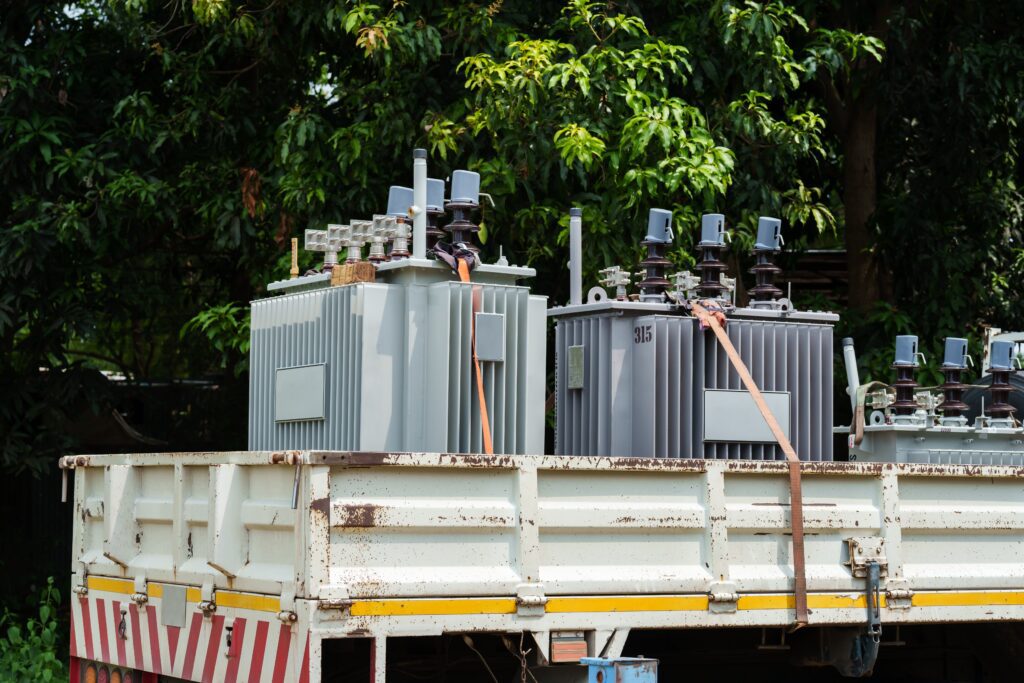
A utility company transported a large power transformer 600 miles to a substation upgrade project. The transformer was secured on a specialized trailer. A ShockLog 298 sensor was attached, paired with ShockLog Cellular GL for real-time monitoring.
During the second day of transport, the system registered a tilt event exceeding preset thresholds. The operations manager received an alert showing the location and severity. The driver confirmed a sharp curve taken at moderate speed caused the trailer to list slightly.
The team reviewed the tilt alert details in the SpotSee Cloud dashboard, including the recorded tilt magnitude and where it occurred. To reduce risk and document due diligence, they routed the shipment through the carrier’s nearest inspection facility. A qualified technician examined the transformer, confirmed no damage, and documented the inspection.
The transformer continued to the site. At receiving, the team reviewed the complete journey record, including the tilt event, inspection, and clearance. The asset was installed without incident.
Without real-time monitoring, this tilt event would have appeared only in post-shipment data review, after the transformer was already at the installation site. The team would have faced a difficult decision: delay the project for precautionary inspection or proceed with uncertainty.
Operational benefits across roles
For logistics coordinators: Visibility into every leg of multi-carrier shipments. Clear documentation for handoffs and chain of custody. Objective data for performance discussions with carriers.
For QA teams: Ability to enforce acceptance criteria based on monitored journey data. Traceable records supporting compliance and audit requirements. Operational data to validate and improve shipping specifications over time.
For asset managers: Confidence that high-value assets arrive in expected condition. Reduced risk of post-install surprises. Lifecycle documentation supporting maintenance and future transport decisions.
For stakeholders: Demonstrable due diligence in asset protection. Faster claims resolution with transparent incident data. Lower total risk exposure across transformer fleet movements.
Implementation considerations
Setup requires custom software, which then communicates the configuration to the ShockLog Cellular GL before deployment. Battery replacement is straightforward. The SpotSee Dashboard is specifically used for monitoring progress and alarms.
The system requires connectivity for real-time alerts, using Wi-Fi and Global Cellular 4G-LTE. In areas with limited coverage, the device stores data locally and transmits when connectivity resumes.
Training requirements are minimal, but necessary for software usage. If your team can access a web dashboard and respond to email or SMS alerts, they can use the system effectively.
Next step
If transformer transport is a regular part of your operations, or if you’re planning a high-value move in the coming months, consider how real-time visibility would change your decision-making.
SpotSee’s team can walk through the technical capabilities, discuss integration with your existing Standard Operating Procedures (SOPs), and outline deployment options. Contact SpotSee to explore whether ShockLog Cellular GL fits your operational needs.
—
You may also like:


