

ShockWatch Label QR takes a familiar clear-to-red impact indicator and adds digital traceability at the moment it matters most, at receipt. A smartphone QR scan creates a cloud-stored, item-level record tied to that specific indicator, with no app required.
For SpotSee direct customers and distributor partners evaluating indicator options, the stance is simple: digital documentation should not require dedicated readers, specialized dock hardware, or an app rollout just to capture a reliable record.
For current ShockWatch Label users, the point is equally direct: add cloud records and item-level traceability while keeping the recipient workflow familiar, a fast visual check followed by standard SOP action when an indicator is red.
Why visual impact indicators are being asked to do more
Visual indicators remain popular because they are unambiguous. A receiver can make a good read or bad read decision in seconds, without logging into a system or interpreting a chart.
The operational gap usually shows up after that decision. Documentation can be inconsistent across sites, shifts, and partners, even when teams are doing the right thing in the moment.
This matters more now because shipments pass through more hand-offs, and investigations often require retrievable records rather than dock memory. This is the gap ShockWatch Label QR is designed to address.
What ShockWatch Label QR adds to a familiar workflow
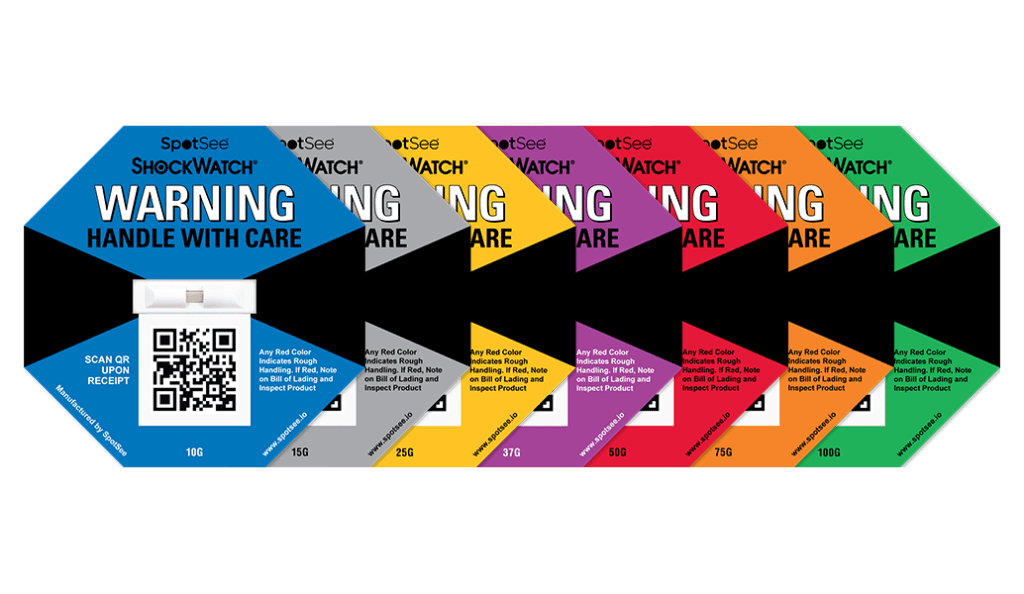
ShockWatch Label QR is a single-use, battery-free, connected impact sensor. It provides clear-to-red visual indication when an impact exceeds the selected threshold.
What it adds is a simple second step that does not slow receiving down. After the visual check, the QR code can be scanned with a smartphone camera, with no app required.
That scan creates a record that is stored in the SpotSee Cloud and is tied to the specific serialized indicator. In practical terms, it turns a visual observation into item-level documentation that can be retrieved later.
Where this fits in an impact monitoring program
ShockWatch Label QR is best viewed as a traceability and documentation layer around a proven receiving moment. The indicator provides a clear-to-red visual impact indication when a selected threshold is exceeded, and a smartphone scan of the QR code records when and where that indicator was checked, tied to its serial number in SpotSee Cloud, with no app required.
Designed for the moments that matter at receipt, ShockWatch Label QR strengthens receiving decisions, exception handling, and investigations by turning a visual check into an item-level, time and location stamped cloud record. It helps teams document what was observed and act consistently, while fitting alongside your established engineering evaluation, validated packaging, and any data logging you already use for deeper analysis.
Why QR matters now for recipients and shipment owners
At the dock, speed and consistency win. A visual indicator works because it is a fast pass or fail check. The problem is that documenting what was seen and what happened next often varies by site, shift, or partner. A QR scan is a lightweight way to standardize that moment without adding dedicated readers, specialized dock equipment, or an app rollout.
For the shipment owner, the value is not the scan itself. It is the retrievable, item-level record it creates. A smartphone QR scan ties condition to a specific serialized indicator and captures time, date, and location in SpotSee Cloud. That gives teams a common reference point for internal accountability and post-shipment reviews, without asking downstream partners or end users to install or maintain an app.
What this looks like when a shipment is received
At the receiving dock: The goal is a realistic hand-off workflow, not a new process. Teams keep the same receiving motion and add traceability only when it matters.
- Shipment arrives and is staged for receipt.
- Receiver checks the indicator visually (clear or red).
- If red, receiver scans the QR code with a smartphone camera, with no app required.
- Receiver follows standard receiving instructions: note on the Bill of Lading and inspect.
For the customer: That one scan creates an item-level record in SpotSee Cloud tied to the serialized indicator, including:
- Indicator condition
- Time and date
- Location
- Serialized identifier for that specific indicator
Let’s imagine a high-value or regulated shipment is questioned after delivery, the shipment owner is not piecing together an unserialized photo, a text message, and a separate receiving note. Instead, they can point back to a single cloud record tied to a specific indicator with time and location context.

What the cloud record enables beyond the dock
For shipment owners, implementation is about moving from “an exception was reported” to “we can show what was observed, on which unit, and when and where it was checked.” Because each ShockWatch Label QR is uniquely serialized, records can be tied back to a specific package or item, even after the shipment is closed.
Operationally, that enables more disciplined exception handling. Teams can identify which items had an impact indication, use time and location context to support internal reviews, and have evidence-based lane and hand-off conversations with partners based on consistent records rather than anecdotes.
From a compliance perspective, the SpotSee Cloud provides 24/7 access to those records, and it is built to comply with 21 CFR Part 11 record keeping and user access requirements. That matters when documentation needs to be retrievable, controlled, and reviewable across Quality, Logistics, and Compliance stakeholders, not just captured at the dock.
Where it helps different teams
Receiving operations benefit from minimal workflow change. The visual check stays primary, and scanning is a fast step used to capture documentation when a decision point occurs.
Logistics teams benefit from consistent exception records that support accountability across carriers, lanes, and transfer points. This is especially useful when multiple sites need to document the same way.
Quality teams benefit from faster investigations because the record is tied to a serialized indicator and includes time and location context.
Compliance teams benefit from a system built to comply with 21 CFR Part 11 (Part 11) record keeping and user access requirements, while still fitting real receiving behavior.
A reasonable counterargument, and why it misses the point
Some teams argue that a visual indicator is enough, and that adding a QR scan adds friction. That concern is valid when scanning requires an app, a reader, or a separate device workflow.
ShockWatch Label QR is designed to avoid that tradeoff. The scan uses a smartphone with no app required, and the workflow stays anchored in the visual check, which is why the added traceability is practical rather than theoretical.
Closing thought
ShockWatch Label QR does not change how impact events are spotted; it changes how they are documented and reviewed across the business.
The outcome is simple: keep the good read or bad read speed, and add item-level digital traceability without adding dock infrastructure.
—
You might also like:


