

If your damage process starts when a return arrives or a claim gets filed, you are already days late.
The operational bottleneck is usually not the inspection capability. It is evidence latency, the delay between a suspect shipment arriving at receiving and a complete record that downstream teams can actually use.
In automotive and industrial logistics, that gap creates avoidable holds, inconsistent handling decisions, delayed investigations, and unnecessary returns that quietly erode revenue.
The teams that reduce those outcomes most consistently are not necessarily the ones with the most monitoring technology. They are the ones that standardize what happens during the first few minutes at receiving.
A practical way to do that is to pair a visible impact indicator with a simple scan workflow that creates the same type of record every time a shipment changes hands.
That is the operational role ShockWatch® 2 QR is designed to support.
The real bottleneck: evidence latency at receipt
Most organizations already have packaging standards, inspection plans, and escalation procedures.
The breakdown usually happens at the dock.
A shipment arrives after multiple hand-offs. Receiving notices something questionable, but the supporting record is incomplete:
- Photos stay on personal phones
- Notes vary by shift or site
- Packaging observations are inconsistent
- Claims teams receive partial information days later
As a result, packaging engineering, logistics, quality, and warranty teams spend time reconstructing what happened instead of responding to a clear operational record.
Three questions usually drive the entire downstream workflow:
- What condition was observed
- When was it observed
- Where was it observed
If those answers are inconsistent, every hand-off after receiving slows down.
A typical automotive receiving scenario
Imagine a palletized automotive assembly arriving after several custody changes:
- Supplier pickup
- Carrier transfer
- Crossdock handling
- Final plant delivery
Receiving now has to determine the next operational path:
- Move into inventory
- Route to controlled inspection
- Hold and escalate for review
Without a standardized signal and a standardized record, the outcome becomes subjective.
One site may move the shipment forward and investigate later. Another may hold anything questionable. Over time, that inconsistency creates friction between receiving, logistics, packaging engineering, and quality.
The issue is not simply whether damage occurred. The issue is whether the organization can make a consistent decision at the moment the shipment arrives.
The scan-triggered receiving model
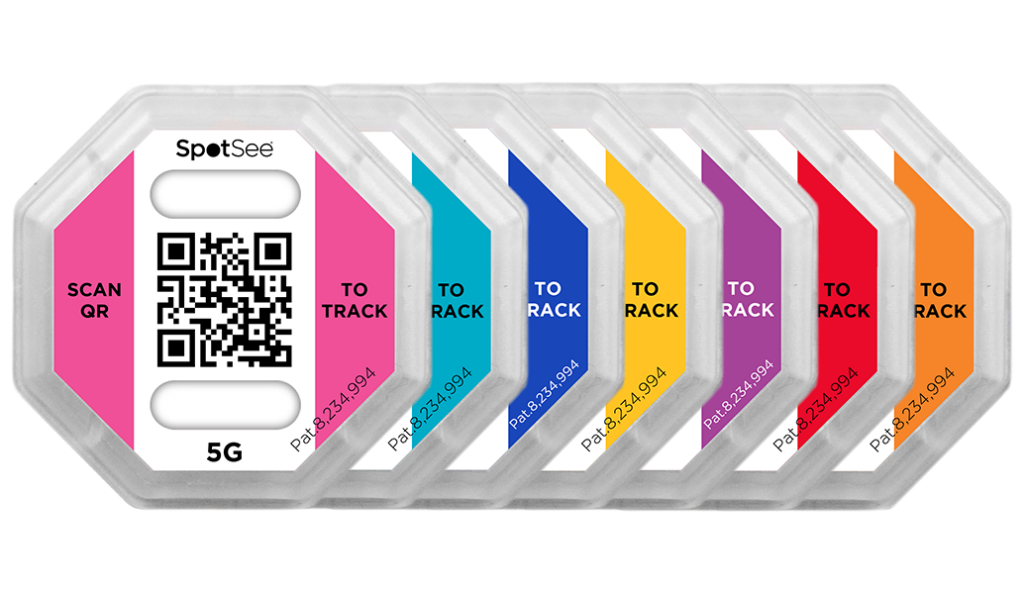
ShockWatch® 2 QR supports a straightforward operational approach: make receiving the evidence capture point, and make the record consistent enough that downstream teams can act without rework.
THe ShockWatch 2 QR is a single-use, battery-free impact indicator that changes from clear to red when an impact exceeds the selected threshold.
That visual change creates an immediate operational cue.
Instead of stopping at the visual check, the receiver scans the QR code using a smartphone camera. No app is required.
The scan uploads a record to SpotSee Cloud that includes:
- Indicator condition status
- Date and Timestamp
- Geo-Location
- Photos of the indicator
The value is not simply “more data.” The value is that the shipment condition is documented consistently at the exact moment receiving decides what happens next.
One boundary keeps this operationally accurate: impact indicators complement protective packaging. They do not replace validated packaging design or testing
A receiving workflow that stays fast
A strong receiving process is not the one with the most steps. It is the one teams can execute consistently under real dock conditions.
A practical workflow looks like this:
Inspect the shipment
Check for visible issues such as crushed corners, punctures, broken wrap, or shifted loads.
Check the indicator
Use consistent language:
- Good read → indicator not triggered
- Bad read → indicator triggered
Scan the QR code
Capture the condition record, timestamp, location, and photos.
Link the scan to shipment identifiers
Examples include:
- PO
- BOL
- Tracking number
- Container ID
- Lane
- Carrier
Apply the operational path
Use the same disposition flow every time:
- Move forward through standard receiving
- Route to inspection
- Hold and escalate for review
The important point is consistency. The workflow should produce the same type of record regardless of site, shift, or operator.
Good read vs. bad read: dock-ready logic
Good read
A good read means the indicator did not trigger above the selected threshold.
Operationally, the shipment proceeds through normal receiving and existing inspection plans.
The scan still matters. Good-read records help establish baseline handling patterns across lanes and facilities.
Bad read
A bad read means the indicator triggered above the selected threshold.
That should trigger a defined SOP response, not an argument on the dock and not an automatic conclusion that the product is unusable.
Typical actions include:
- Move shipment to hold or controlled inspection
- Capture photos and notes immediately
- Escalate to quality, packaging engineering, or logistics with the completed record
The goal is not to make a final determination at receiving. The goal is to create enough consistent evidence that downstream teams can respond quickly and confidently.
Build escalation packets that downstream teams can actually use
Receiving should not send scattered emails and disconnected photos.
The strongest workflows create one standardized documentation package that downstream teams can review immediately.
A practical escalation packet includes:
Shipment identifiers
- PO
- BOL
- Tracking number
- Lane
- Carrier
- Trailer or container ID
Item identifiers
- Part number
- Lot number
- Serial number, where applicable
- Quantity potentially affected
Receiving details
- Site
- Date and time
- Receiver
- Shift
- Brief condition notes
Condition evidence
- QR scan record
- Timestamp and location
- Photos where supported
Because the structure is consistent, teams spend less time asking follow-up questions and more time focusing on containment, inspection, packaging review, or carrier discussions.
How cloud records improve accountability across hand-offs
SpotSee Cloud supports both individual shipment review and broader trend analysis.
At the shipment level, quality and packaging teams can review the same standardized evidence without relying on informal notes or disconnected photos.
At the network level, aggregated scan records can help teams identify:
- Higher-risk lanes
- Repeat handling problems
- Facilities with recurring issues
- Opportunities for packaging or SOP improvements
That visibility does not guarantee claim outcomes or eliminate investigations. It creates a more consistent operational record across hand-offs.
Choosing the right indicator rating
Threshold selection should never be guesswork.
Indicator sensitivity should be based on:
- Product fragility, weight, dimensions, etc.
- Packaging performance testing
- Engineering data
- Warranty trends
- Historical shipping damage patterns
A visible impact signal only becomes operationally useful when the threshold reflects a meaningful handling risk for that specific shipment type.
Conclusion
Reducing shipping damage returns is rarely about investigating faster after the fact.
The larger opportunity is making receiving a controlled, repeatable decision point with:
- A clear visible signal
- A consistent scan workflow
- A traceable evidence record that survives hand-offs
If you want fewer avoidable disputes and more consistent receiving outcomes, start by standardizing what happens during the first five minutes at the dock.
–
You might also like:


