

Visible shipment monitoring is not only about detecting an issue after delivery. In receiving operations, its most practical value is that it changes behavior before an issue becomes a receiving exception, because it makes accountability and the next SOP step unmistakable at the handoff.
What “deterrence” means in shipment monitoring
In shipment monitoring, deterrence means the indicator is doing work before anyone scans a QR code or reviews a download. The simple presence of a visible indicator on the outside of a shipper communicates two operational facts: someone will check it at receipt, and a “good read or bad read” will trigger documented action.
This matters because a large share of risk shows up at the receiving moment. The end user could be a warehouse operator, distribution center receiver, field technician, or site operations team managing inbound shipments under time pressure. In that environment, ambiguity is the enemy. A visible indicator reduces ambiguity by turning “handle quickly” into “this requires immediate attention.”
If you want a behavioral framing, this aligns with the Hawthorne effect, where awareness of observation can change behavior. In practice, the effect is stronger when “being observed” is paired with a defined decision at receipt, not just the idea that data exists somewhere.
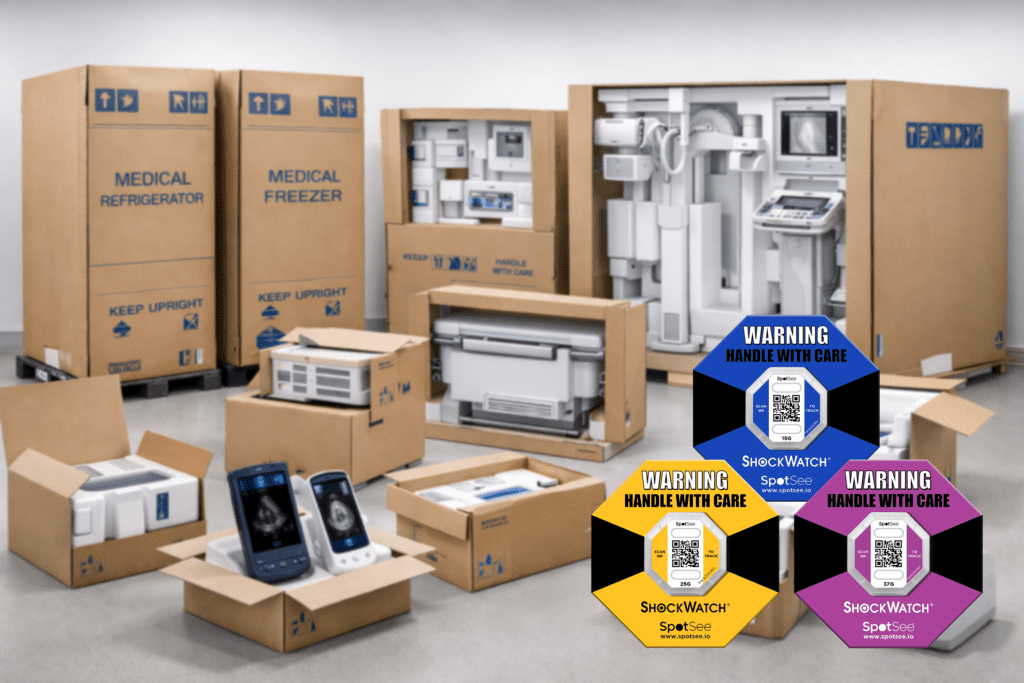
The receiving moment: where visibility changes outcomes
Deterrence shows up most clearly at handoffs, because handoffs are where expectations and accountability can drift. Shipments may move through multiple teams, but the final recipient is the one who must decide what happens next.
When the receiver can see an indicator immediately, the workflow becomes easier to execute consistently. Instead of relying on memory or verbal instruction, the receiver has a prompt that supports a stable sequence: check, document, then route the shipment into the correct SOP (Standard Operating Procedure).
We have seen receiving teams become more consistent simply by removing “interpretation time.” When the dock or receiving bench has a visible cue and a clear decision rule, fewer shipments end up sitting while someone asks, “Do we need to prioritize this one?” Instead, the visible indicator prompts immediate handling, reducing the risk of shipments being left unattended or delayed before intake.
In industrial and high-value logistics environments, this behavioral shift is measurable. The use of visible impact indicators such as ShockWatch® 2 QR has been associated with a 40-60% reduction in damage, not because of post-event analysis, but because handlers adjust behavior when they know shipments are being monitored.
The indicator does not guarantee product quality, but it can reduce the chance that the process itself introduces avoidable risk.
A practical example: mirrors arriving at a distribution center (hypothetical)
Imagine a shipment of large, fragile mirrors arriving at a distribution center or installation site. These are high-risk items where even a single impact can lead to cracks or invisible structural damage. A visible impact indicator, such as ShockWatch 2 QR, is placed on the outside of the shipment where it is immediately seen during receiving.
Because the indicator is visible, the receiver is more likely to treat the shipment as a controlled receiving event, not a routine parcel. That changes the immediate choices that drive risk:
The shipment is brought into the receiving area and handled promptly, rather than waiting at a front desk.
The receiver performs a good read or bad read check as part of the intake, then documents that check according to the SOP.
If the indicator shows a condition change, the receiver follows the exception path, which typically means segregate, quarantine, and escalate for inspection or claim evaluation.
This is deterrence in operational terms. The indicator makes it harder for anyone to “skip a step” without it being obvious later.
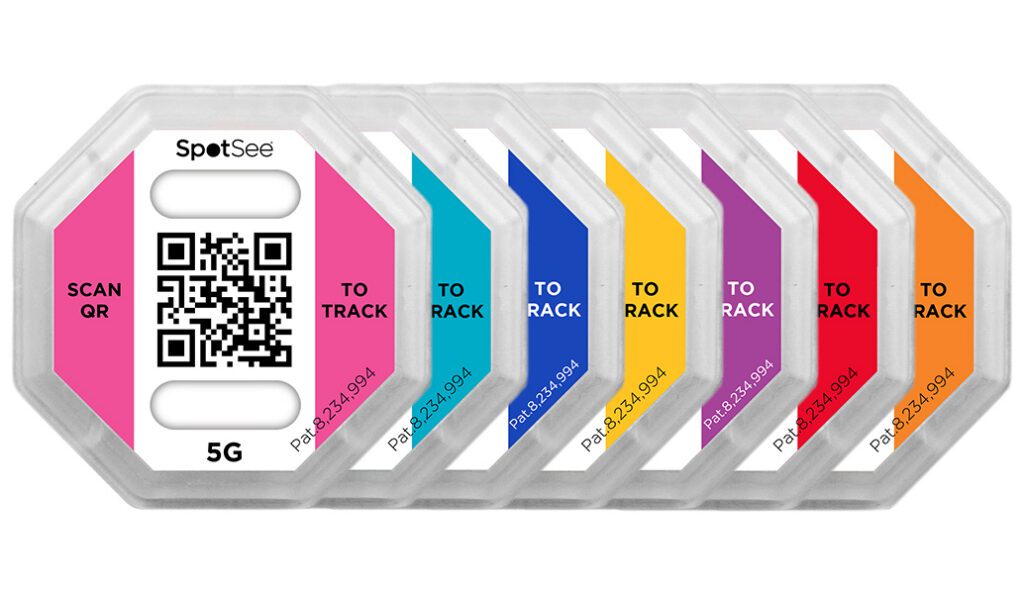
What visible indicators can do, and what they cannot
Visible indicators are best understood as workflow controls. They support receiving discipline and clearer decisions, but they are not a substitute for validated controls.
Visible indicators can:
– Make handling expectations explicit at the last-mile handoff
– Trigger consistent inspection and documentation steps at receipt
– Reduce ambiguity for accept, quarantine, or escalate decisions
Visible indicators cannot:
– Replace validated packaging
– Provide full condition history or explain the complete sequence of events during transit
– Provide validated confirmation that internal product condition was maintained
That last point is important for compliance-aligned workflows. An indicator can inform receiving action, but it should not be presented as evidence that the product stayed within specification internally.
How to build a “deterrence loop” into your receiving SOP
Deterrence works when visibility is tied to a decision and that decision is tied to action. If you want the indicator to change behavior reliably, design for the moment the end user actually touches the shipment.
- Make expectations visible at the point of handoff
Place the indicator where the receiver will see it during normal intake. If the receiver has to hunt for it, the process reverts to memory and habit. - Define the decision in plain language
Write the receiving rule so it can be executed under time pressure. For example, “If bad read, segregate and notify QA” is operational. Vague instructions like “review and assess” invite variation. - Specify the exception path, not just the ideal path
Most SOPs describe the happy path standard operating path in detail and the exception path loosely. Deterrence improves when the exception path is as concrete as the normal path, including who owns the next step and what gets documented. - Train the handoffs, not only the QA team
Receiving discipline often breaks at shift changes, coverage gaps, or peak delivery windows. Because of that, train the people who physically receive shipments, not only the people who investigate exceptions. - Document consistently, then use that documentation
Documentation is not busywork if it closes the loop. When teams review exceptions and clarify SOP language, handlers learn that the indicator check is a real control point, not a formality.
A reasonable counterargument, and why deterrence still holds
A fair objection is that “people can ignore indicators.” That can happen, especially if the indicator is treated as informational only, with no defined decision and no follow-up.
Deterrence still holds when you design the system so ignoring the indicator creates friction, while following the SOP is the easy path. In practice, that means the indicator check is embedded in receiving documentation, and a bad read has an unambiguous next step. Visibility is the cue, but process is what makes it durable.
Conclusion
Visible shipment monitoring reduces risk when it is treated as an operational control at the last-mile receiving moment, not as a post-event diagnostic tool. If the indicator is visible and the SOP is explicit, you get better handling discipline before problems turn into receiving exceptions.
—
You might also like:


