

Wax Melt Temperature Indicator Label Technology
Wax Melt technology dates back to the 1940s, when it was originally developed to create early temperature indicator labels showing when food rations had been exposed to excessive heat. Today, the small number of original temperatures has been greatly expanded upon.
The most common use of Wax Melts is its self-adhesive thermometer labels, used in a huge number of common applications including:
- Warranty Indicators
- Electrical Overheat Indicators
- Process Thermometers
- Brake Caliper Thermometers
- Monitoring Shipping Temperatures
- Textile Fusing Thermometers
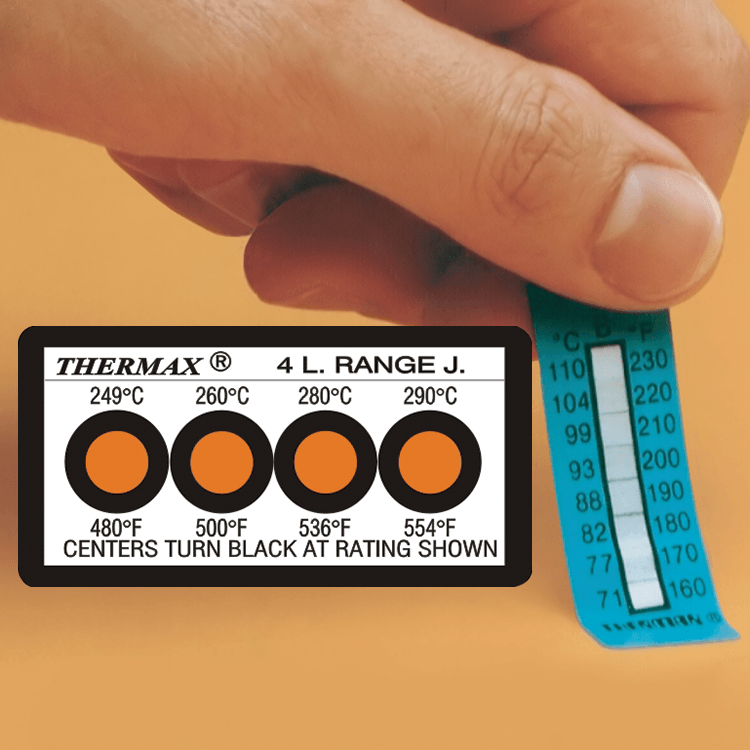
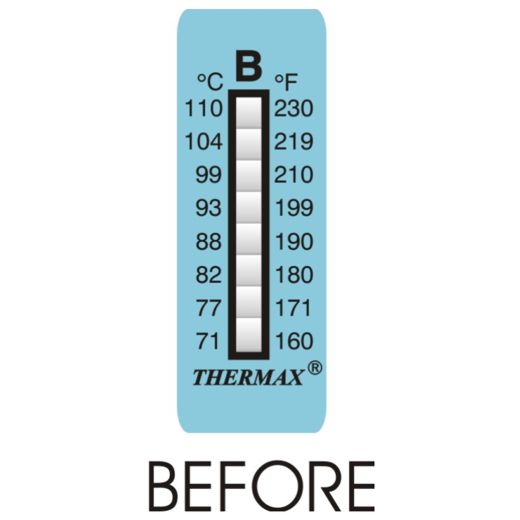
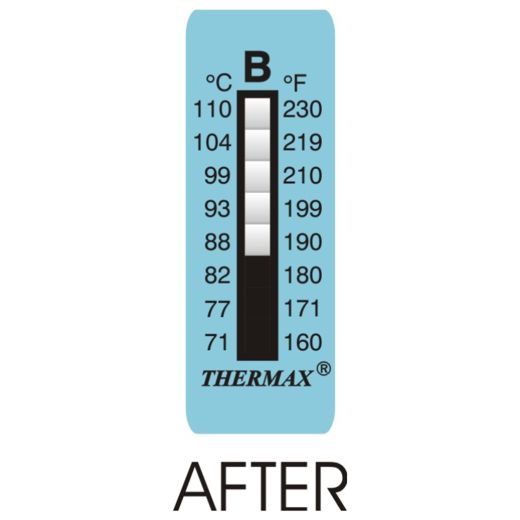
Each element in these wax melt temperature labels changes color distinctly as its rated temperature is exceeded. The changes are irreversible, providing a temperature history of the surface being monitored. The labels will not de-laminate when removed for reference and can be attached to an inspection report to serve as a permanent record of attained temperature.
HOW THE LABELS WORK:
The temperature-sensitive elements in these wax melt labels use phase-change chemistry with sharply defined melting points to provide clear, reliable color changes when temperature thresholds are exceeded. Each temperature element uses a different chemical compound and is made separately by applying a coating containing the chemical to a special absorptive paper substrate, which is usually black. When the rated temperature is exceeded, the chemical melts and is absorbed by the substrate, causing a permanent color change to black. Up to ten elements can be combined on a single label.
The waxes melt over a relatively sharp range of temperature and can be formulated to react to many temperatures between -29°C (84°F) and 290°C (554°F) and react to changes in temperature as small as 0.2°C (0.4°F). Accurate to up to +/- 1°C to 100°C, +/-1.5°C to 154°C and +/-4°C across the rest of the range, if stored and used correctly.
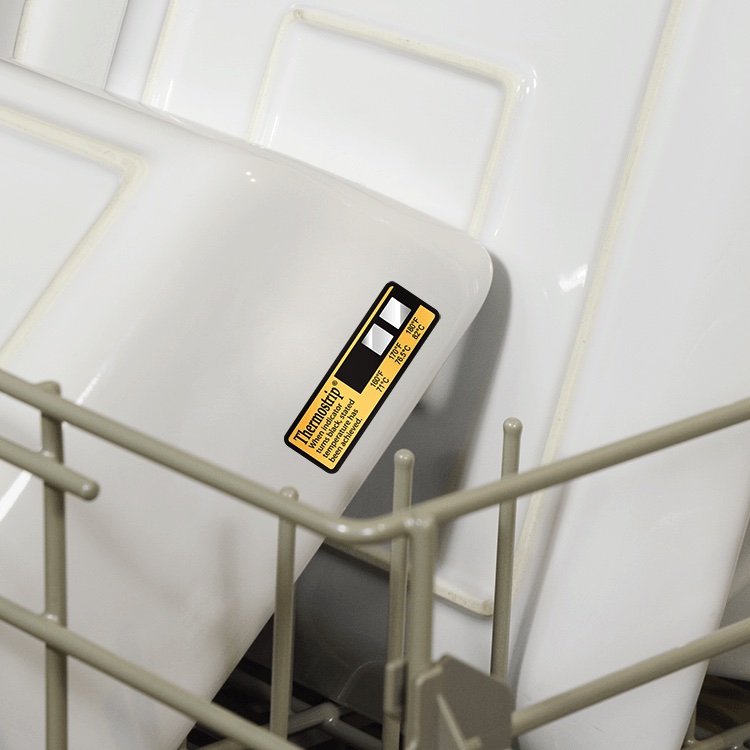
RECORDING DISHWASHER SURFACE TEMPERATURE
Thermostrip DL labels confirm that sanitizing temperatures were reached during a dish washing cycle. These labels provide an easy method of record-keeping.
Shelf Life:
- Temperatures up to 36ºC (96.8ºF) 6 months from date of invoice when stored in a refrigerator.
- Temperatures up to 49ºC (120ºF) 12 months from invoice date when stored in a refrigerator.
- Temperatures 50ºC (122ºF) to 290ºC (554ºF) 24 months from invoice date when stored in cool dark environment between 18 and 22ºC.


