

Cell and gene therapies create an unusually demanding cold-chain environment. Many therapies are highly temperature sensitive, extremely valuable and time critical. Some are also patient specific, making the consequences of a compromised shipment particularly significant.
Maintaining the required temperature range is therefore essential throughout storage and transportation. But knowing that temperature needs to be monitored is only the beginning.
The next question is: what level of temperature evidence does your team need?
For some shipments, a visual pass/fail indicator can provide the immediate evidence needed at receipt. For others, quality teams may need a detailed temperature history to understand when and for how long an excursion occurred. And for high-value or complex shipments, connecting condition data with time and location can provide additional context while the therapy is in transit.
Choosing the right approach starts with understanding the decision that needs to be made when a shipment arrives or an exception occurs.
The International Society for Cell & Gene Therapy (ISCT) has made cold-chain readiness a specific area of focus in 2026. Its Cold Chain Management and Logistics Working Group is addressing practices across cryopreservation, storage, shipping, handling and thawing, reflecting the importance of maintaining controlled conditions throughout the therapy journey.
Why cell and gene therapy cold chains demand greater visibility
Cell and gene therapies can move through multiple controlled environments before reaching the patient. Depending on the therapy and distribution model, that journey may include manufacturing facilities, storage locations, specialized logistics providers and clinical sites.
For autologous therapies, the logistics challenge is even more specific. Patient-derived material is collected, transported for manufacturing and ultimately returned for administration to that same patient. Temperature control, timing and traceability all become critical parts of getting the right therapy to the right place under the required conditions.
Each hand-off also creates a point where teams may need evidence that temperature requirements have been maintained.
The challenge is that not every monitoring technology provides the same type of evidence. A visual indicator can quickly show that a defined threshold has been crossed. A data logger can provide a record of temperature over time. A connected monitor can add information about when and where an exception occurred.
The right choice depends on what your team needs to know and what action that information will trigger.
When you need an immediate pass/fail temperature indication
At some receiving points, the most important question is straightforward: was this shipment exposed to temperatures outside its specified range?
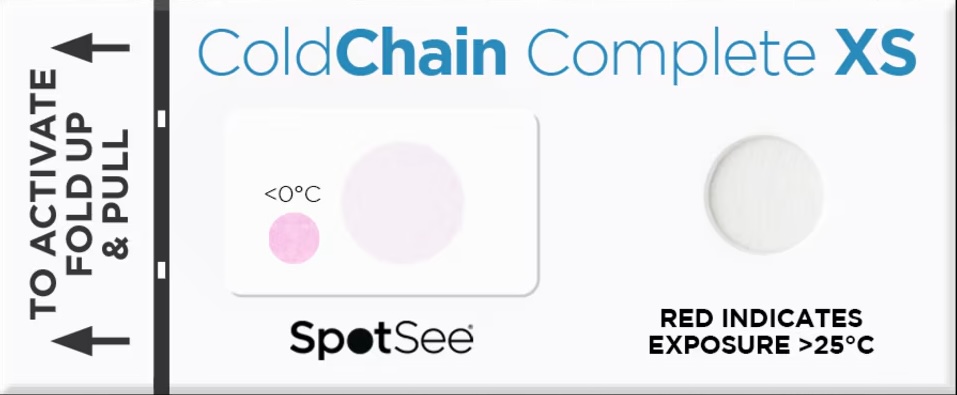
ColdChain Complete combines ascending and descending temperature indicators to provide irreversible visual evidence of temperature excursions. ColdChain Complete and the smaller adhesive-backed ColdChain Complete XS can be incorporated into different packaging configurations.
These indicators do not provide a continuous temperature history. Instead, they provide clear pass/fail evidence that specified temperature conditions have been maintained or exceeded.
That distinction can make them useful when receiving teams need an immediate visual indication before following their established quality procedures.
If the indicator shows that an excursion occurred, the shipment can be flagged for further evaluation according to the organization’s predefined inspection, quarantine or disposition process.
When exposure below a specific temperature is the concern
Temperature-sensitive therapies are not only vulnerable to excessive heat. Depending on the product and required storage range, exposure below a defined temperature can also be a concern.
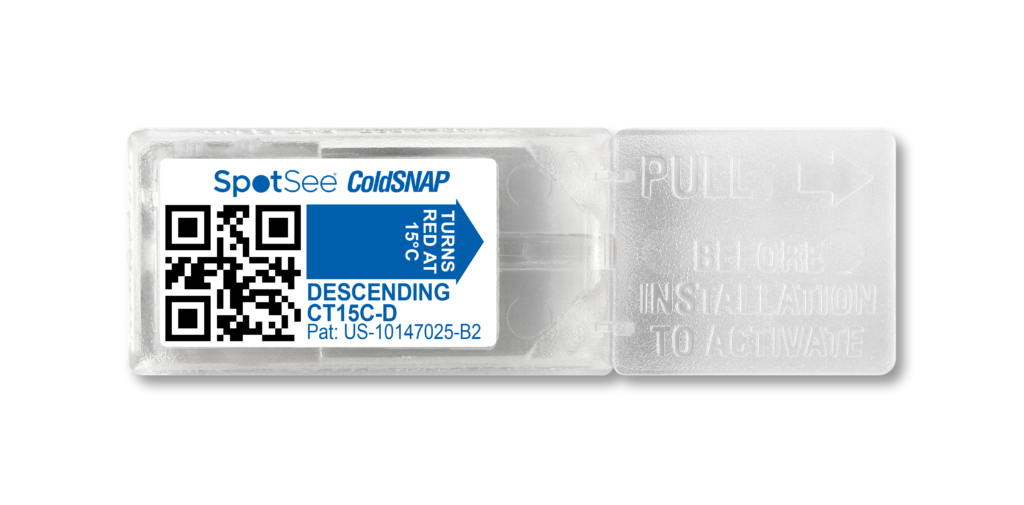
ColdSNAP is a descending temperature indicator designed to provide irreversible visual evidence when a monitored product reaches or falls below its specified threshold.
Once triggered, the visual change remains even if the shipment subsequently returns to an acceptable temperature.
That gives receiving teams a simple way to identify that a cold-temperature threshold was crossed during storage or transportation.
As with ColdChain Complete, the value is immediacy. The indicator is not intended to reconstruct the entire temperature journey. It answers a specific operational question and can trigger the appropriate quality process when an excursion is identified.
When you need to understand the temperature history
For some cell and gene therapy shipments, knowing that an excursion occurred is not enough.
Quality teams may need to determine when the temperature moved outside the specified range, how conditions changed over time or how long an excursion lasted. Those questions require a temperature data logger rather than a pass/fail indicator.
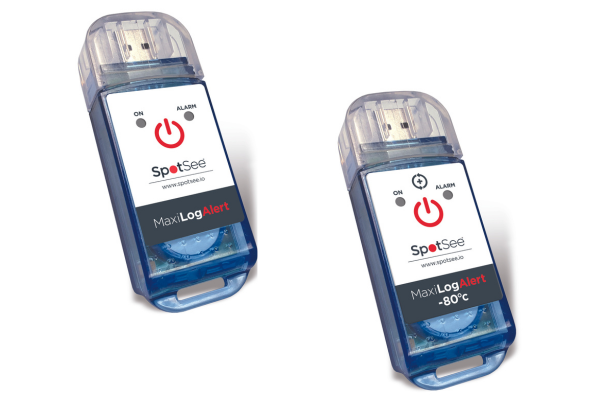
SpotSee’s MaxiLog temperature data loggers record temperature throughout storage and transportation, creating a temperature history that can be reviewed after the shipment.
MaxiLog PDF, for example, is a single-use temperature data logger that automatically generates a PDF report when connected via USB. MaxiLog Alert options can provide configurable alarm parameters and recorded measurement data for applications requiring more detailed temperature documentation.
This level of information can support investigation when an excursion occurs because teams have more than an indication that a threshold was crossed. They have a record showing how temperature behaved during the monitored period.
For high-value, temperature-sensitive therapies, that distinction can be important when quality teams need evidence to support their established evaluation and disposition procedures.
When you also need to know when and where an exception occurred
Some cell and gene therapy shipments require another level of visibility, particularly when products are high value, time sensitive or moving through complex logistics networks.
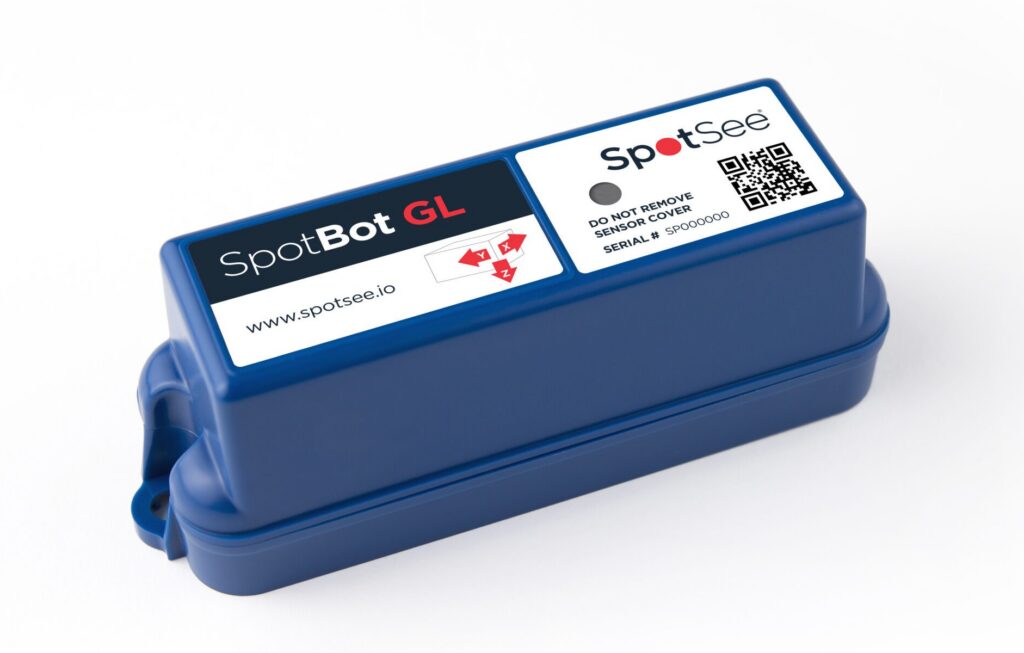
SpotBot GL combines condition monitoring with location information. It monitors temperature, humidity and tri-axial impact while using cellular, Wi-Fi and GPS technologies to provide shipment location data through the SpotSee Cloud.
This gives logistics teams additional context when an exception occurs.
Instead of learning only that a temperature threshold was exceeded, teams can identify when and where the monitored event was recorded.
For example, that information may help determine whether an exception occurred before a shipment reached an airport, while it was at an intermediate logistics location or during the final stage of transportation.
SpotBot GL does not replace the quality procedures used to determine whether a therapy remains suitable for use. It provides information that can help logistics and quality teams investigate what happened and respond according to those established procedures.
Match the monitoring approach to the decision
There is no single temperature-monitoring solution that every cell and gene therapy shipment requires.
The appropriate level of monitoring depends on the therapy, its specified temperature range, the complexity and duration of the journey and, importantly, what the organization needs to know when the shipment reaches its destination.
If the primary need is an immediate indication of whether a specified temperature threshold was crossed, ColdChain Complete, ColdChain Complete XS or ColdSNAP can provide visual pass/fail evidence.
If quality teams need to review how temperature changed throughout the monitored period, MaxiLog provides a recorded temperature history.
And when logistics teams need condition data alongside time and location information during transit, SpotBot GL provides connected shipment visibility.
These technologies answer different questions. The goal is not necessarily to collect the maximum amount of data on every shipment. It is to collect the right level of evidence for the decisions your team needs to make.
For cell and gene therapy logistics, the question is not whether temperature should be monitored. It is what level of temperature evidence your team needs to make the right decision when a shipment arrives or an excursion occurs.
—-
You might also like


