

When a fragile or high-value shipment arrives at its destination, the condition of the packaging does not always tell the full story. A box may look intact even if the equipment inside experienced a significant impact during transportation or handling.
Shock indicators and shock recorders are designed to help teams detect potentially damaging impacts, but they provide different levels of information. A shock indicator shows whether a defined impact threshold was exceeded, while a shock recorder captures data about impact events during transportation or handling. Both help logistics, receiving and quality teams identify shipments that may require closer inspection.
However, an activated shock indicator does not automatically mean the product was damaged. It means a specified impact condition was reached. Similarly, a shock recorder provides information about the forces a shipment experienced, not a definitive assessment of product damage. Understanding that distinction, and the different levels of information available from shock-monitoring technologies, is essential for making informed shipment decisions.
What does a shock indicator detect?
Shock indicators respond to mechanical shock, typically measured in units of gravitational acceleration (G-force). When an impact exceeds the indicator’s calibrated threshold under the specified conditions, the device activates.
For example, a shipment containing sensitive electronic equipment may require a different impact threshold than one carrying more robust industrial components. Selecting the appropriate sensitivity depends on several factors, including product fragility, shipment weight, packaging design and the forces the product can tolerate.
Traditional visual shock indicators provide a permanent indication that a threshold event occurred. Shock recorders, on the other hand, capture data about impact events, including their timing, magnitude and other characteristics, depending on the device.
The important distinction is between detecting an impact and confirming damage. An activated indicator signals that the shipment experienced conditions that warrant attention. Determining whether the contents were affected requires inspection, testing or further evaluation according to the product’s quality requirements.
Shock indicator vs. shock recorder: indication versus recording
Although both technologies help monitor shipment handling, shock indicators and shock recorders answer different questions.
A shock indicator is designed to show whether a specified impact threshold has been exceeded. It provides a straightforward signal, often through a permanent visual change, that helps receiving teams identify shipments requiring attention. Some indicators also incorporate QR codes or RFID technology to make that status easier to document or capture digitally. However, they do not provide a detailed record of the forces experienced throughout the journey.
A shock recorder goes further by collecting electronic data about impact events. Depending on the device, this can include when an impact occurred, its magnitude and additional information about shipment conditions. This allows teams to investigate events in greater detail, review shipment history and identify handling patterns that may need attention.
The choice between indication and recording depends on the decision the information needs to support. If the primary question is whether an impact threshold was exceeded, an indicator may be sufficient. If teams need to understand what happened during transportation, a recorder provides additional context.
Visual shock indicators: a simple way to identify potential damage
For many shipments, the most important question is straightforward: did the package experience an impact above an acceptable threshold?
Visual shock indicators answer that question without requiring batteries, electronic equipment or specialized software. Typically attached to the outside of a package, these indicators change appearance when their calibrated impact threshold is exceeded.
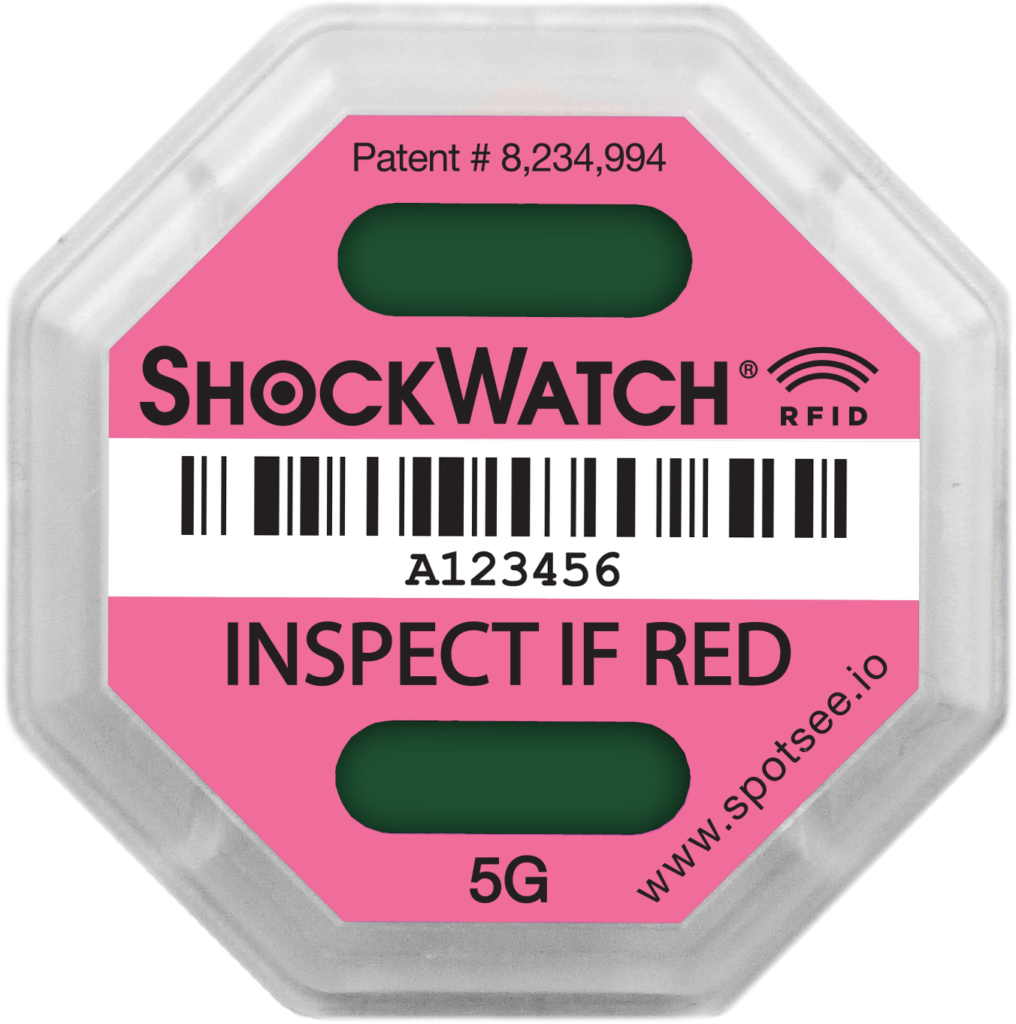
ShockWatch indicators provide this type of visual monitoring. When activated, the indicator changes color, alerting handlers and receiving personnel that the shipment may have experienced potentially damaging forces.
This approach is particularly useful for shipments of medical devices, electronics, precision instruments and other fragile products where recipients need an immediate signal to determine whether additional inspection is necessary.
Visual indicators also make monitoring apparent throughout the shipping process, encouraging more careful handling. Their primary purpose, however, remains to identify potential exceptions. They do not provide a detailed history of what happened during transportation.
QR-enabled shock indicators: adding digital documentation
A visual alert can identify a potential issue, but some organizations also need to document what was observed, when it was recorded and where the shipment was received.
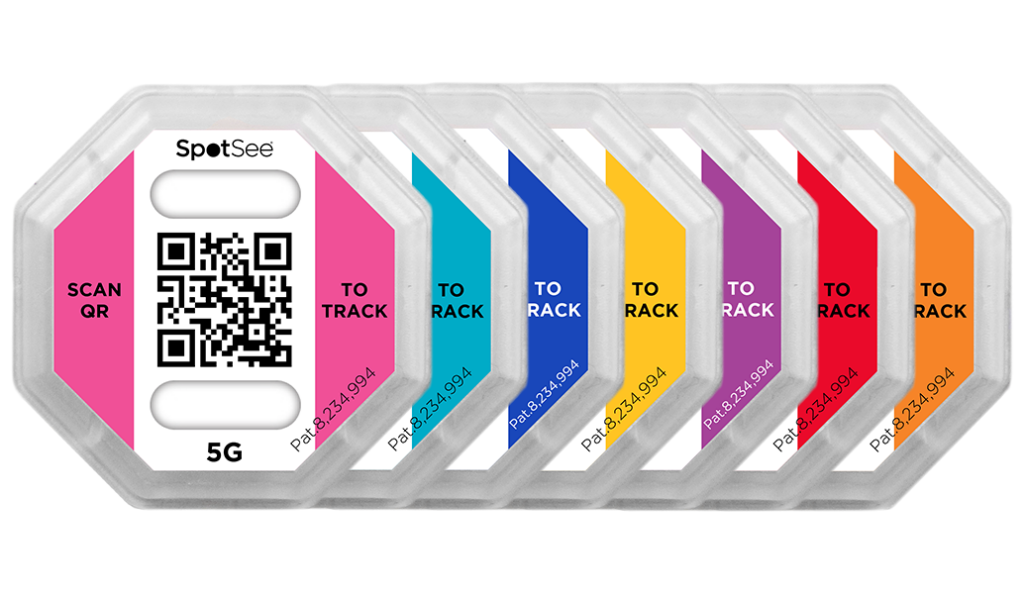
QR-enabled shock indicators add a digital documentation layer to traditional impact detection.
ShockWatch 2 QR combines a battery-free visual impact indicator with a QR code that can be scanned using a smartphone. Each scan can capture the indicator’s condition, scan date and time, location and unique identification information, creating a digital record in the SpotSee Cloud.
This is particularly valuable at shipping handoffs, receiving docks and other points where responsibility for a shipment changes.
Instead of relying solely on a visual inspection or manually recorded observation, teams can document the indicator’s status and associate it with a specific shipment.
An important distinction is that QR scanning records the indicator’s condition at the time of the scan. It does not continuously measure impact forces or establish the exact time an impact occurred.
For organizations that need consistent receiving procedures, digital traceability and documentation to support quality investigations, QR-enabled indicators provide additional information without requiring continuous electronic monitoring.
RFID shock indicators: integrating impact detection into logistics workflows
When organizations handle large shipment volumes, individually inspecting and documenting each indicator may become impractical.
RFID-enabled shock indicators address this challenge by integrating impact status into radio-frequency identification workflows.
ShockWatch RFID combines impact detection with passive UHF RFID technology. Compatible RFID readers can capture the identification and impact status of tagged shipments without requiring direct line-of-sight scanning.
This makes RFID particularly useful in warehouses, distribution centers and manufacturing environments where products already move through RFID-enabled inventory systems.
For example, an organization receiving hundreds of sensitive components could use RFID scanning to identify which shipments experienced an impact above their selected threshold. Those shipments can then be flagged for inspection according to established procedures.
The value of RFID monitoring is not necessarily more detailed impact data. It is the ability to capture and incorporate condition information into existing logistics operations more efficiently.
Electronic shock recorders: understanding what happened during transit
Visual, QR and RFID indicators primarily identify whether an impact threshold was exceeded. Some shipments require more detailed information about what happened during transportation. This is where electronic shock recorders come in.
Electronic impact monitors record data about shock events, allowing teams to investigate the conditions a shipment experienced throughout transportation or handling.
Different shock recorders offer different levels of detail and connectivity, depending on the application.
SpotBot GL: connected shipment condition monitoring
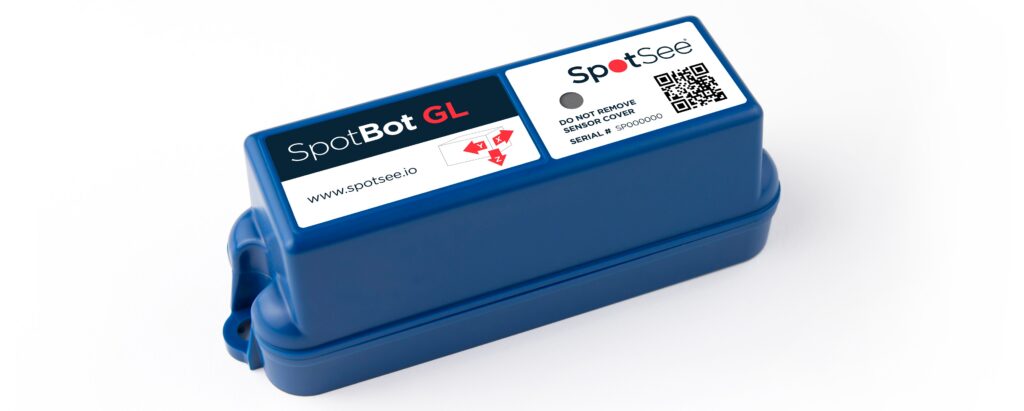
SpotBot GL is an electronic recorder that monitors impact, temperature, humidity and location through cellular and WiFi connectivity. Data and notifications are available through the SpotSee Cloud, helping teams maintain visibility into shipment conditions throughout the journey.
Connected monitoring can be valuable for high-value or time-sensitive shipments where identifying an issue before delivery may allow teams to investigate, contact logistics partners or prepare an appropriate response.
SpotBot GL is suited to applications where teams need accessible shipment condition data and connected visibility without the more detailed shock and vibration analysis provided by advanced recorders.
ShockLog 298: more detailed impact and vibration recording
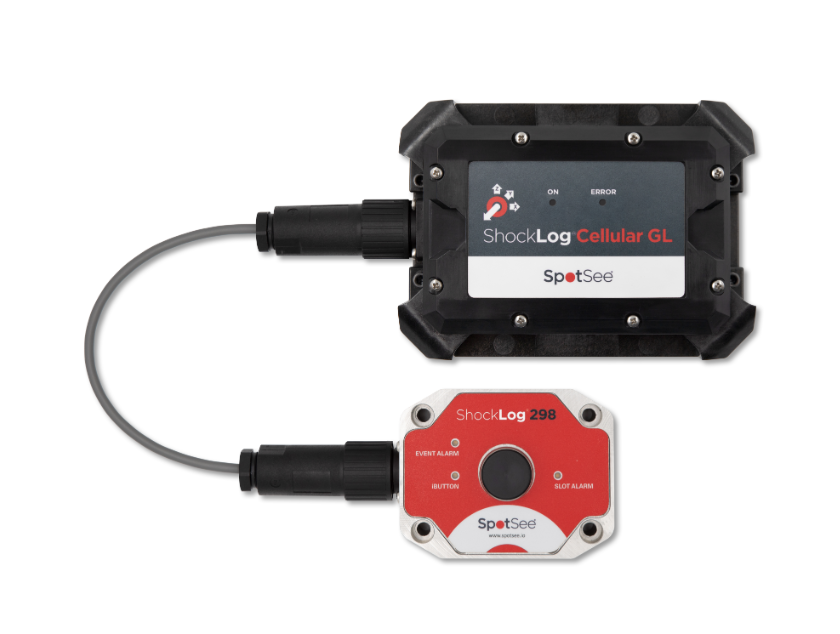
For applications requiring more detailed and specific monitoring, the ShockLog 298 records shock and vibration events and can support additional environmental monitoring through optional sensors. Its recorded information helps teams examine the timing and characteristics of events, identify recurring handling problems and evaluate transportation conditions.
This level of monitoring can be particularly relevant when transporting large industrial equipment, power generation components, precision machinery or other assets where an unexpected impact could have significant operational consequences.
Electronic recording also supports longer-term analysis. Rather than investigating individual shipments in isolation, organizations can review monitoring data to identify patterns associated with particular routes, handling processes or transportation methods.
Adding connectivity with ShockLog Cellular GL
For applications that require both detailed shock recording and remote visibility, ShockLog 298 can be paired with ShockLog Cellular GL to add cellular connectivity. This combination allows teams to access detailed monitoring information remotely rather than relying exclusively on data retrieved after delivery.
This approach is particularly useful for high-value or sensitive equipment where teams need both detailed impact analysis and the ability to monitor conditions while the shipment is moving.
Unlike QR-enabled indicators, which create records when scanned, connected electronic recorders can communicate shipment condition information remotely during transportation, subject to connectivity and device configuration.
What should you do when a shock indicator activates or a recorder detects an event?
An activated shock indicator or a recorded impact event should trigger a defined inspection or investigation process rather than an automatic conclusion that the shipment is damaged.
The appropriate response depends on the product, its sensitivity and the organization’s quality requirements.
Receiving teams should first document the indicator’s condition and examine the external packaging for signs of mishandling. Depending on the product, further steps may include opening the package for inspection, checking sensitive components, performing functional tests or placing the shipment on hold pending quality approval.
Where electronic monitoring is available, teams can review recorded impact data to better understand the event and determine whether additional investigation is necessary.
It is equally important to establish these procedures before shipment. When handlers, receiving personnel and quality teams understand what an activated indicator or a recorded impact event means and how to respond, monitoring information becomes part of a consistent decision-making process.
How do you choose between a shock indicator and a shock recorder?
An activated shock indicator should trigger a defined inspection or investigation process rather than an automatic conclusion that the shipment is damaged.
The appropriate response depends on the product, its sensitivity and the organization’s quality requirements.
Receiving teams should first document the indicator’s condition and examine the external packaging for signs of mishandling. Depending on the product, further steps may include opening the package for inspection, checking sensitive components, performing functional tests or placing the shipment on hold pending quality approval.
Where electronic monitoring is available, teams can review recorded impact data to better understand the event and determine whether additional investigation is necessary.
It is equally important to establish these procedures before shipment. When handlers, receiving personnel and quality teams understand what an activated indicator or a recorded impact event means and how to respond, monitoring information becomes part of a consistent decision-making process.
How do you choose the right type of shock monitoring?
The right solution depends on the information your team needs and the decisions that information will support.
| Monitoring type | What it tells you | Best suited for |
| Visual indicators | Whether a specified impact threshold was exceeded | Simple receiving inspections |
| QR-enabled indicators | Impact status with scan-based digital documentation | Shipment traceability and handoffs |
| RFID indicators | Impact status integrated into RFID workflows | High-volume logistics operations |
| Connected shock recorders (SpotBot GL) | Recorded shipment condition data available remotely during transit | High-value shipments requiring connected visibility |
| Detailed electronic recorders (ShockLog 298) | Detailed information about recorded shock and vibration events | Investigations, equipment monitoring and shipment history |
| Detailed recording with cellular connectivity (ShockLog 298 + Cellular GL) | **Detailed impact data combined with remote monitoring |
Product fragility, packaging, shipment value, transportation conditions and quality requirements should all influence the selection.
More information is not automatically better. A visual indicator may provide everything needed to support a receiving decision, while another shipment may justify detailed event recording or connected monitoring.
The goal is to collect information that helps teams take appropriate action, not simply to generate more data.
Turning impact detection into better shipment decisions
Shock indicators and shock recorders help organizations identify potentially damaging impacts that might otherwise go unnoticed. But their value depends on how the information is used.
Whether the monitoring approach involves a simple visual indication, QR-enabled documentation, RFID integration or electronic shock recording, each technology answers a different operational question.
Choosing the right approach starts with understanding the shipment’s risks, defining what constitutes an unacceptable handling event and establishing what should happen when one is detected.
With the right monitoring and response process in place, teams can move beyond assumptions about shipment condition and make more informed decisions about inspection, quality and handling improvements.
—-
You might also like