

News

What is a temperature excursion and what should you do when one happens?
A temperature-sensitive shipment arrives at its destination, but the monitoring device indicates that temperatures went outside the acceptable range during transit. Does that mean the product is compromised? Should it be quarantined, returned or released for use? A...
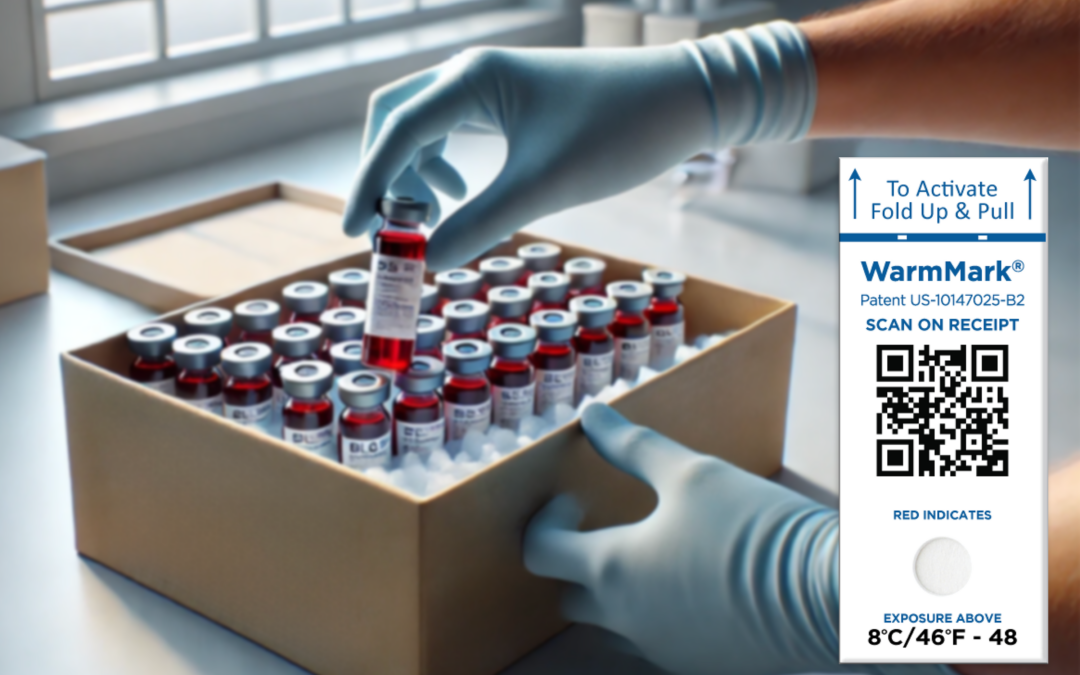
Peptides Are Coming to the Doorstep. Will They Arrive Intact?
Six peptides just got a path into licensed compounding pharmacies. When they ship to patients' homes, a small connected label can show whether each package stayed in range. On October 28, 2026, the U.S. Department of Health and Human Services announced a temporary...

How do you choose the right impact indicator for a shipment?
Once you know impact is a meaningful risk for a shipment, the next question is not simply whether to monitor it. It is what type of impact monitoring the shipment actually needs. For some shipments, a clear visual indication that a potentially damaging impact occurred...

New Distributor Announcement: SpotSee + SAB Imballaggi
Siamo lieti di dare il benvenuto a SAB Imballaggi come nuovo distributore SpotSee per il Nord Italia! L’esperienza di SAB Imballaggi negli imballaggi su misura, unita agli indicatori SpotSee progettati per monitorare le condizioni di trasporto, dà vita a una solida...

Cold chain monitoring systems explained: indicators, data loggers and IoT monitoring
Cold chain monitoring is often discussed as a choice between technologies. Indicator or data logger? Connected or non-connected? Real-time visibility or information at receiving? But for most logistics, quality and operations teams, the more useful question is...

How should you monitor fragile shipments: impact, tilt or both?
A fragile shipment is not necessarily vulnerable to every type of handling event. Some products can be damaged by a sudden impact. Others need to remain upright throughout transportation. Some sensitive or high-value assets face both risks. That distinction matters...

What are the different types of time-temperature indicators and when should you use each?
Not every temperature-sensitive shipment needs the same type of monitoring. For some shipments, the most important question is simple: did the product experience a temperature outside its acceptable range? For others, teams may need to know how long an excursion...

QR indicator vs. data logger: how much shipment data do you actually need?
When a shipment arrives, how much information do you actually need to make the next decision? Sometimes the answer is a complete history. You need to understand what happened throughout transit, when conditions changed and potentially where an exception occurred. But...

Shipping industrial robots and automation equipment without compromising precision
Industrial robots and automation equipment are built for precision. Shipping them is considerably less precise. A robotic arm, cobot, automation cell or control system can arrive at an installation site with its crate intact and no obvious signs of damage. But...

Cell and gene therapy logistics: what level of shipment monitoring do you need?
Cell and gene therapies create an unusually demanding cold-chain environment. Many therapies are highly temperature sensitive, extremely valuable and time critical. Some are also patient specific, making the consequences of a compromised shipment particularly...

Lithium battery shipping rules changed in 2026. What should logistics teams monitor beyond the label?
Lithium battery transportation has always required careful handling. In 2026, the rules became even more specific. From January 1, 2026, lithium-ion cells and batteries packed with equipment under IATA Packing Instruction 966 are subject to new state-of-charge...

How to choose the right impact monitoring solution for automotive supply chain parts
Not every automotive part needs the same level of monitoring. A high-volume bracket moving between two nearby plants and a precision battery pack crossing three continents face different risks, and the right monitoring tool depends on the part's value, the complexity...

The hidden risk upon receipt at the transplant center
A package arrives at a transplant center. The surgical team is already in motion, the transplant window is narrow, and the implant, tissue, or organ is expected. The product looks correct. The packaging is intact. The team proceeds. None of that confirms the product...

The cost of finding out too late: why condition monitoring is moving closer to the receiving dock
A shipment arrives at the receiving dock. The packaging is intact. The carrier marks it delivered. No one flags anything. Later, a component fails inspection, a temperature-sensitive product is found to have been compromised, or a warranty claim is filed. This...

“Temperature compliant” and “temperature documented” are not the same thing
You have invested in validated packaging. You have a qualified carrier. The shipment leaves your facility within specification and arrives on time. By every internal measure, the cold chain held. And yet the receiving team cannot confirm it. The patient does not know...

Stop rejecting shipments you can’t explain: how QR-enabled temperature indicators end “return by default”
A temperature-sensitive shipment arrives at a pharmacy. The box looks intact. The driver reports it was kept cold throughout transit. But there is no record, no log, nothing the pharmacist can scan or present to a quality reviewer. So the shipment gets rejected....

Turning receiving checks into traceable decisions with SpotSee RFID Products
Condition indicators do not usually fail on the dock. The record fails. The operational win with SpotSee’s RFID products is not “more data,” it is turning a receiving check into a repeatable decision and a retrievable audit trail that holds up at the next hand-off. In...

The data center boom is putting server racks at risk in transit: here’s how to protect them
Damage doesn't announce itself at the loading dock. It shows up later, during commissioning or the first power-on, when a failed drive or a cracked chassis turns a deployment timeline into a claims conversation. Data centers are being built faster than at any point in...

When a simple temperature check is all you need
Not every workflow needs a data logger Every temperature monitoring decision starts somewhere. And for many teams, it starts with the same assumption: more data is better. So they reach for connected loggers, cellular devices, and cloud dashboards, even when the...

Did it happen or is it happening? Choosing the right condition indicator
The choice between irreversible and reversible indicators is not a technical preference. It is a decision about what you need the indicator to do: permanently prove that an exposure occurred, or minimum/maximum temperature was reached, or give your team real-time...