
Temperature Indicator Labels
SpotSee’s temperature indicator labels use Wax Melt technology, a precise melting-point chemistry, not electronics or external power, to create a permanent visual record when a set temperature is exceeded. Available as temperature indicating labels, strips, and stickers, they give you an accurate, at-a-glance color-change reading with no instruments required.
- Defined Melting Points – high-accuracy temperature indicator readings, with the ability to specify exact thresholds for your application
- Sensitive & Precise – reacts to changes in temperature as small as 0.2°C (0.4°F), across a –29°C to 290°C (–84°F to 554°F) range
- Permanent Color Change – an irreversible, tamper-evident record for quality control, warranty claims, and abuse tracking in the field
Temperature Indicator Labels vs. Temperature Stickers
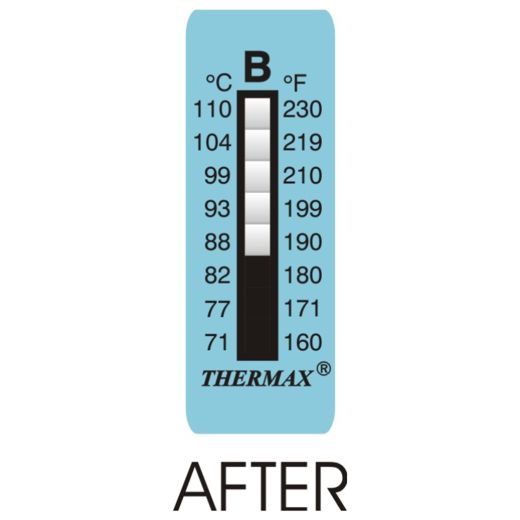
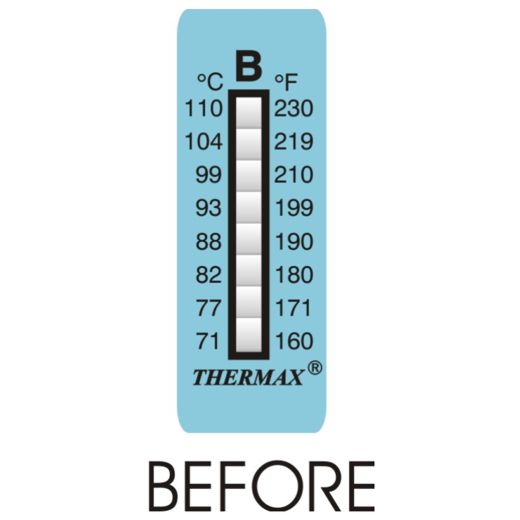
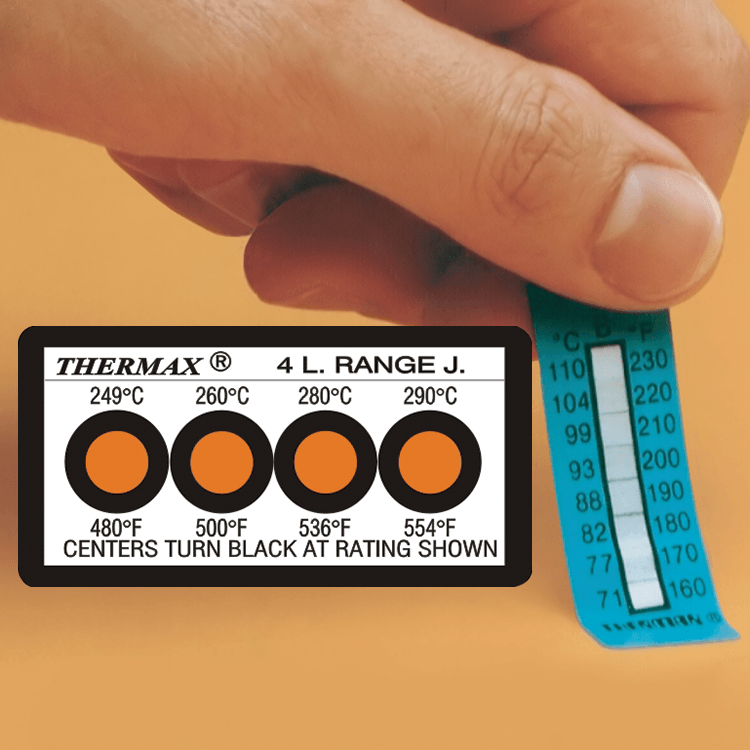
“Temperature indicator label” and “temperature indicator sticker” describe the same self-adhesive, color-change technology: the difference is form factor and where it’s applied. SpotSee’s temperature indicating labels are available as individual labels, multi-element strips, or single-point stickers, so you can match the format to the surface: equipment housings, shipping cartons, dishwasher racks, or brake components. All formats use the same defined-melting-point chemistry and give the same permanent, tamper-evident color change.
Because these are temperature sensitive labels rather than reusable gauges, once the rated threshold is crossed the color change stays, which is exactly what makes them reliable evidence for audits, warranty claims, and process validation.
How Wax Melt Temperature Indicator Labels Work
Each label contains a purified organic compound with a sharply defined melting point. When the rated temperature is exceeded, the compound melts, is absorbed into an absorptive paper substrate, and produces a permanent color change to black. Up to ten temperature elements can be combined on a single label, so one temperature indicator sticker can flag multiple thresholds at once.
Wax Melt technology dates back to the 1940s, when it was originally developed to create early temperature indicator labels that showed when food rations had been exposed to excessive heat. The same melting-point principle still delivers consistent, instrument-free accuracy today.
Key Advantages
- Permanent record – of temperature exposure for audits and quality control
- High measurement accuracy – ±1°C up to 100°C, ±1.5°C up to 154°C, ±4°C across the rest of the range
- Immediate visual confirmation – no instruments or power needed to read a result
- Simple to apply – on equipment, packaging, or in transit
Temperature Indicator Label Applications
Where these temperature sensitive labels and stickers are used most:
- Shipping Temperature Indicators – flag heat exposure during transit so damaged or compromised shipments are caught before they reach the customer
- Warranty Indicators – remove the risk of false warranty claims by recording whether a product was overheated
- Electrical Overheat Monitoring – catch overheating in panels, transformers, and connections before it causes failure
- Process & Test Thermometers – verify that a process step reached (or stayed under) its required temperature
- Brake Caliper Thermometers – record peak brake temperature for performance and safety testing
- Textile Fusing Thermometers – confirm fusing presses hit the correct temperature for consistent bonding
Temperature Indicator Label Applications
Where these temperature sensitive labels and stickers are used most:
- Shipping Temperature Indicators – flag heat exposure during transit so damaged or compromised shipments are caught before they reach the customer
- Warranty Indicators – remove the risk of false warranty claims by recording whether a product was overheated
- Electrical Overheat Monitoring – catch overheating in panels, transformers, and connections before it causes failure
- Process & Test Thermometers – verify that a process step reached (or stayed under) its required temperature
- Brake Caliper Thermometers – record peak brake temperature for performance and safety testing
- Textile Fusing Thermometers – confirm fusing presses hit the correct temperature for consistent bonding
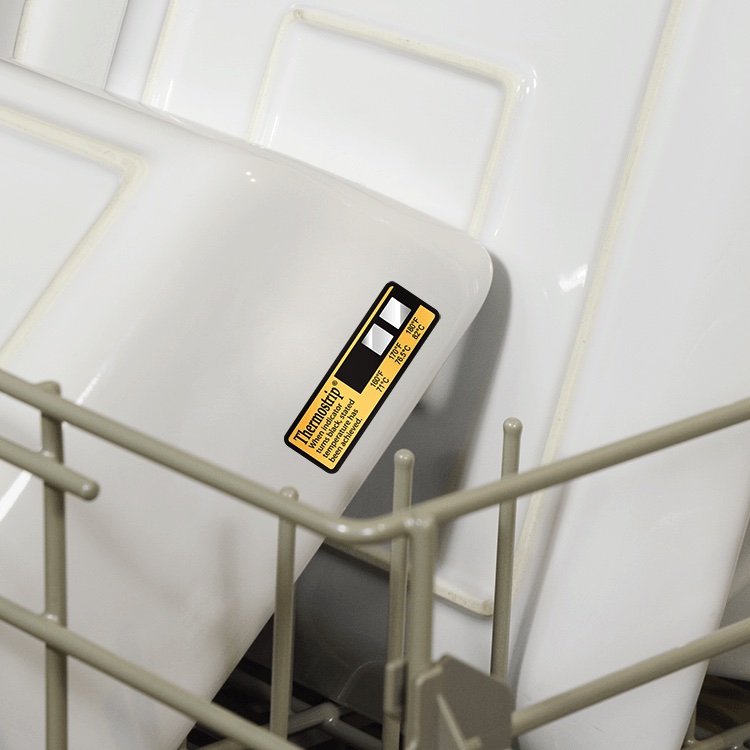
Recording Dishwasher Surface Temperature
Commercial dishwasher validation is a common use case for these temperature indicating labels: a label applied to the dish surface or rack records whether the wash cycle reached sanitizing temperature, giving food-safety teams a permanent, checkable record without a handheld thermometer.
Shelf Life
Keep the existing shelf-life table exactly as published: it’s factual product data, not copy:
| Up to 36°C (97°F) | 6 months, refrigerated |
| Up to 49°C (120°F) | 12 months, refrigerated |
| 50–290°C (122–554°F) | 24 months, cool dark storage (18–22°C) |
Do the same for the existing temperature range / sensitivity / accuracy spec block: keep it unchanged.