

Temperature-sensitive products can be exposed to conditions outside their acceptable range at several points during shipping and storage. A delayed delivery, an unexpected temperature change in a warehouse or a problem during a handoff can introduce risks that may not be visible when the shipment arrives.
For logistics, supply chain and quality assurance teams, the challenge is knowing whether those conditions occurred and determining what to do next.
Time-temperature indicators provide a practical way to identify potential temperature excursions. By responding to predefined temperature conditions, they create a visible indication that can help teams assess shipments without needing to retrieve and analyze a complete temperature record.
However, not every indicator responds to temperature in the same way. Understanding how they work, what their results mean and where their limitations lie is essential to using them effectively.
What is a time-temperature indicator?
A time-temperature indicator is a monitoring device designed to provide visible evidence of temperature exposure based on predefined conditions. These conditions can include a specific temperature threshold and a defined duration of exposure above or below that threshold. Depending on the technology, an indicator may respond as soon as a temperature limit is reached or only after the product has been exposed to that temperature for a specified period of time. This distinction is important because some products can tolerate brief temperature fluctuations, while others may be affected by prolonged exposure outside their acceptable range.
Many indicators use temperature-sensitive materials that change color when their activation conditions are met. These changes are typically irreversible, meaning the indication remains visible even after temperatures return to an acceptable range.
This makes them useful for identifying potential temperature excursions that may have occurred before a shipment reaches its destination.
For example, a pharmaceutical shipment may arrive at the correct temperature but have experienced excessive heat during an earlier stage of transportation. An irreversible indicator can provide evidence of that exposure even though the temperature has since returned to normal.
How do time-temperature indicators respond to temperature?
Time-temperature indicators work by using materials or mechanisms that react to specific temperature conditions. The response depends on the technology and the type of exposure the indicator is designed to detect.
Some indicators respond when a defined temperature threshold is reached or exceeded. These are useful when the primary concern is whether a product experienced a temperature outside its acceptable range, regardless of how long that exposure lasted.
Other indicators account for both temperature and duration. These cumulative time-temperature indicators respond progressively to exposure above a specified threshold. Their response allows teams to identify whether a shipment has experienced the predefined combination of temperature and time.
Freeze indicators work in the opposite direction. They are designed to identify exposure below a specified temperature, which is particularly important for products that may be damaged by freezing or excessive cold.
The underlying technologies vary, but the purpose is consistent: to turn temperature exposure into information that receiving and quality teams can act on.
What does a time-temperature indicator result mean?
An indicator result should always be interpreted according to the product’s specific activation conditions.
A triggered indicator provides evidence that the defined temperature conditions were met. For a threshold indicator, this may mean the temperature crossed a specified limit. For a cumulative indicator, it means the required exposure conditions were reached.
A non-triggered indicator means its activation conditions were not met during the monitoring period. However, that does not necessarily confirm that the product remained within every acceptable temperature limit or that its quality was unaffected.
Consider a shipment of temperature-sensitive diagnostic materials. If an indicator designed to detect excessive heat has activated, the receiving team knows the shipment experienced the conditions required to trigger that indicator. What they do not automatically know is whether the materials have been compromised.
That determination depends on the product’s stability requirements, the monitoring specifications and the organization’s quality procedures.
An indicator provides evidence of exposure, not an automatic judgment about product quality.
How do different SpotSee temperature indicators work?
Different temperature risks require different monitoring approaches. SpotSee offers several indicator technologies designed to provide specific types of temperature-exposure information.
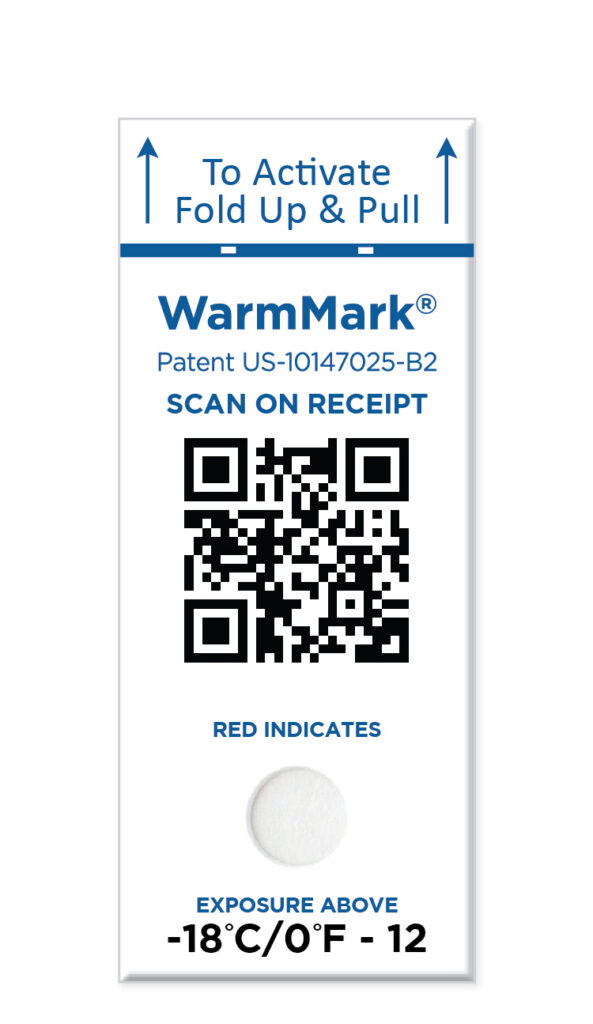
WarmMark QR: cumulative exposure above a temperature threshold
WarmMark QR is a single-use, battery-free time-temperature indicator designed to detect cumulative exposure above a specified temperature threshold.
Rather than reacting to every brief temperature fluctuation, it responds when its defined time-temperature activation conditions are met. Once activated, the indicator undergoes an irreversible color change.
WarmMark QR also includes a QR code that can be scanned using a smartphone. Each scan documents the indicator’s condition along with information including time, date, location and serial number in the SpotSee Cloud.
This allows teams to capture evidence of temperature exposure at receiving or other inspection points without requiring a traditional electronic data logger.
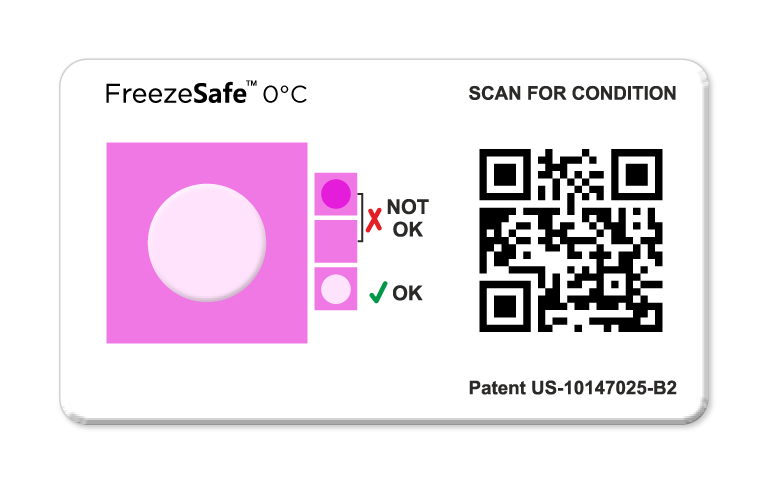
FreezeSafe QR: detecting exposure below a temperature threshold
FreezeSafe QR is designed to identify exposure below a specified temperature threshold.
This is particularly relevant for products that are sensitive to excessive cold, including certain pharmaceuticals, biologics and diagnostic materials.
When the temperature falls below the indicator’s activation threshold, FreezeSafe QR provides an irreversible visual indication. Its QR functionality also allows users to document the result digitally, creating a record associated with the individual indicator.
Unlike cumulative warm-temperature indicators, FreezeSafe QR is focused on identifying a defined descending temperature event rather than measuring cumulative exposure over time.
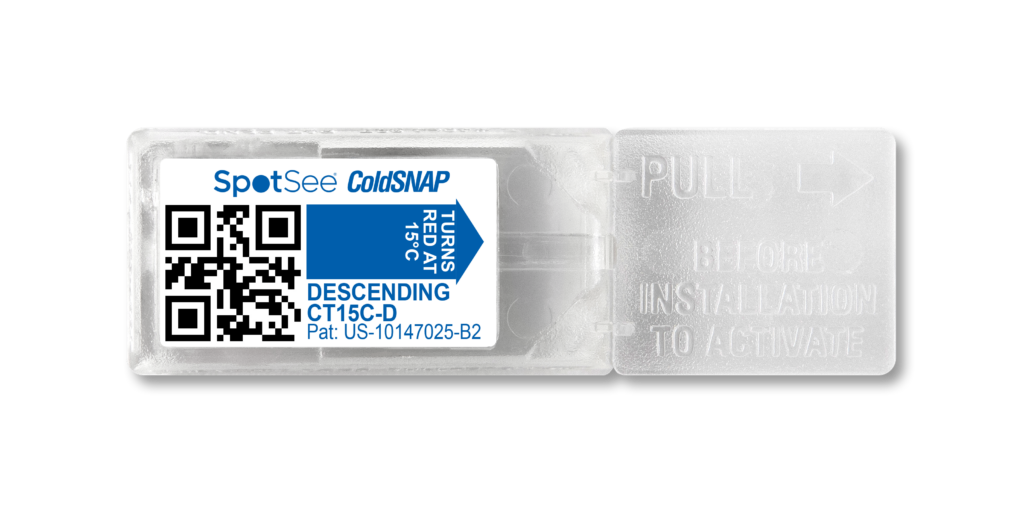
ColdSNAP: visual evidence of cold exposure
ColdSNAP provides another approach to detecting potentially damaging cold conditions.
These single-use indicators use a mechanical sensing mechanism to identify when temperatures fall below a specified threshold. Once activated, the viewing window changes permanently from clear to red.
ColdSNAP can be useful when teams need a straightforward visual indication of cold exposure without requiring electronic equipment or digital documentation.
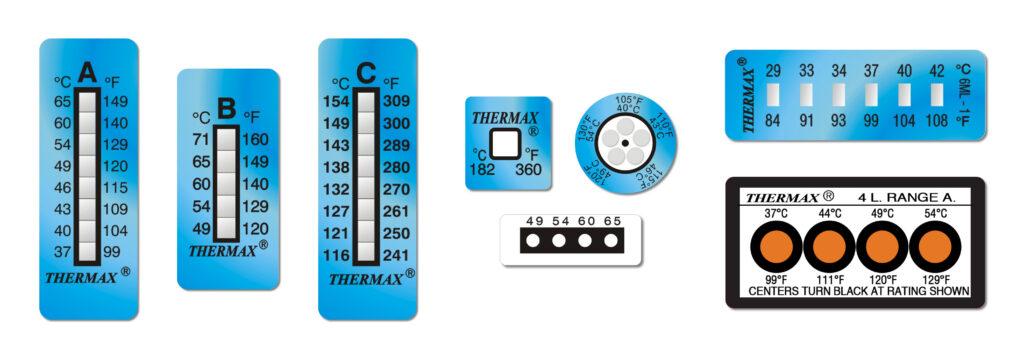
Thermax: identifying maximum temperature exposure
Thermax uses irreversible, temperature-sensitive elements that change color when their rated temperatures are reached.
Unlike cumulative time-temperature indicators, Thermax responds directly to temperature thresholds. Some labels contain multiple temperature-sensitive elements, allowing users to identify the highest indicated temperature range reached.
Thermax is particularly useful for industrial applications, equipment monitoring and processes where identifying maximum temperature exposure is more relevant than measuring exposure duration.
What can a time-temperature indicator tell you?
The primary value of a time-temperature indicator is its ability to provide visible evidence of defined temperature exposure.
Depending on the technology, that information may help a receiving team determine whether a shipment experienced excessive heat, whether a cumulative exposure condition was reached or whether temperatures dropped below an acceptable threshold.
For organizations managing high volumes of temperature-sensitive shipments, this information can support consistent receiving procedures. Instead of relying exclusively on assumptions about transportation conditions, teams can inspect an indicator and identify shipments that may require additional review.
QR-enabled indicators add another layer of documentation by allowing teams to record the observed result at specific inspection points. This can be particularly useful when products move between multiple facilities, distribution partners or end recipients.
What can’t a time-temperature indicator tell you?
Although time-temperature indicators provide useful information, they are not intended to answer every question about a shipment’s temperature history.
Most do not record exact temperatures continuously throughout the journey. They generally cannot identify precisely when an excursion began, how temperature changed over time or what the highest or lowest temperature was, unless that information is specifically supported by the indicator’s design.
They also cannot independently determine whether a product remains safe or suitable for use after an excursion.
For applications requiring detailed temperature records, electronic data loggers may be more appropriate. These devices record measurements at intervals throughout the monitoring period, allowing teams to review temperature changes and investigate excursions in greater detail.
The distinction is not necessarily about choosing one technology over another. Indicators and data loggers can serve complementary purposes within the same monitoring program.
How should teams use time-temperature indicator results?
Effective temperature monitoring starts before a shipment leaves the facility.
Teams should first define the product’s acceptable temperature conditions and identify which types of exposure could affect its quality. The selected indicator should have activation parameters appropriate for those requirements.
Receiving personnel also need clear instructions for reading and documenting the result. A visible indication is only useful when the person inspecting it understands what it means and what action should follow.
For example, an activated freeze indicator on a shipment of temperature-sensitive pharmaceuticals may trigger a quarantine and quality review rather than immediate acceptance or rejection. The quality team can then evaluate the indication alongside product stability data, shipping records and any additional monitoring information available.
Similarly, a non-triggered indicator can support routine receiving procedures, provided the monitoring approach is appropriate for the product and the organization’s established acceptance criteria.
By integrating indicator checks into documented receiving and quality workflows, organizations can make temperature-exposure information more consistent and actionable.
Turning temperature exposure into better decisions
Time-temperature indicators offer a practical way to identify temperature exposure without requiring a complete electronic temperature record for every shipment.
Whether the concern is cumulative heat exposure, a specific temperature threshold or damaging cold conditions, the key is understanding what each indicator is designed to detect and how its result should be interpreted.
When selected appropriately and integrated into clear receiving and quality procedures, these indicators help teams identify potential excursions, document observations and determine when further investigation is needed.
The goal is not simply to detect temperature changes. It is to give the people responsible for a shipment the information they need to make informed decisions about what happens next.
—-
You might also like