

Industrial robots and automation equipment are built for precision. Shipping them is considerably less precise.
A robotic arm, cobot, automation cell or control system can arrive at an installation site with its crate intact and no obvious signs of damage. But appearance alone cannot confirm what happened during loading, transportation, transfers or final-mile handling. An impact or tilt event may have occurred without leaving visible evidence on the outside of the shipment.
For equipment that may need to be calibrated, commissioned and integrated into a production environment after delivery, that missing information matters. Condition monitoring can give manufacturers, logistics teams and receiving sites evidence of how equipment was handled in transit and help identify shipments that warrant closer inspection before installation.
Why visible condition does not tell the whole story
Industrial automation equipment often combines sensitive electronics, mechanical assemblies, sensors, drives and precisely aligned components. Even when protective packaging performs as intended, teams cannot determine from the condition of the crate alone whether the equipment experienced a potentially damaging event during its journey.
This is the challenge of hidden shipping damage. SpotSee has documented the same problem across other types of high-value industrial equipment: a shipment can appear acceptable externally while shock, vibration or other conditions experienced during transit may have affected what is inside.
For automation equipment, the question at receiving is therefore not simply, “Does the shipment look damaged?”
It is also, “Did anything happen during transportation that means we should inspect this equipment more closely before commissioning it?”
The amount of information needed to answer that question depends on the equipment, its sensitivity and the decisions teams need to make with the data.
Impact: identifying shipments that may need inspection with ShockWatch 2 QR
For many shipments, teams do not need a detailed record of every condition throughout the journey. They need a clear indication that a potentially damaging impact occurred so the equipment can be inspected before moving to the next stage.
ShockWatch 2 QR is a single-use, battery-free impact indicator available in multiple impact thresholds. If the specified threshold is exceeded, the indicator permanently changes from clear to red.
The QR functionality adds a digital layer to that visual indication. Using a smartphone with no dedicated app required, personnel can scan the indicator to capture its condition along with information including the scan time, location and unique serial number. Scan information is uploaded to the SpotSee Cloud, creating a digital record that can support receiving, quality and claims workflows.
For robotic arms, control equipment and other impact-sensitive components, this creates a straightforward receiving process. If the indicator has activated, the team has an objective reason to pause and determine whether additional inspection is appropriate before installation.
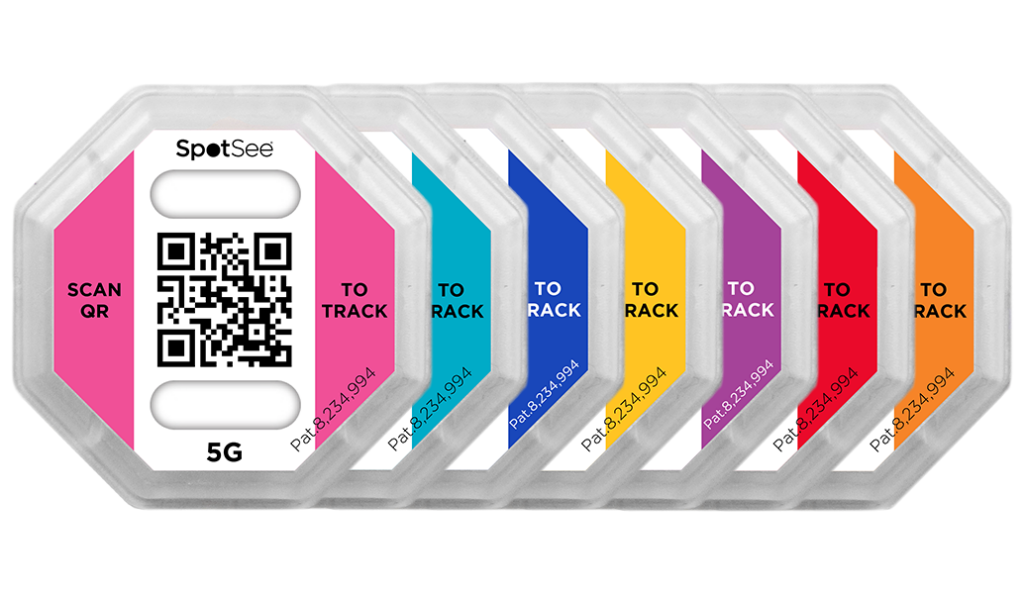
Tilt: knowing whether equipment stayed upright with TiltWatch XTR QR
Impact is not the only concern when moving precision equipment. Some industrial machinery has defined orientation requirements throughout transportation and handling.
A crate may arrive upright at its destination without revealing that it was previously tipped onto its side.
TiltWatch XTR QR provides evidence of this type of handling exception. The single-use indicator turns red when a shipment tips beyond 80°, giving the receiving team an immediate visual indication that the shipment exceeded its tilt threshold.
A smartphone scan captures the tilt condition together with time, location and serial number, creating a digital record at the point of receipt. SpotSee specifically identifies industrial machinery among the applications for TiltWatch XTR QR.
This can be particularly useful for automation cells, cabinets and other equipment that must remain upright. Rather than relying on a “This Side Up” label to determine whether handling instructions were followed, the receiving team has evidence that can inform its inspection process.
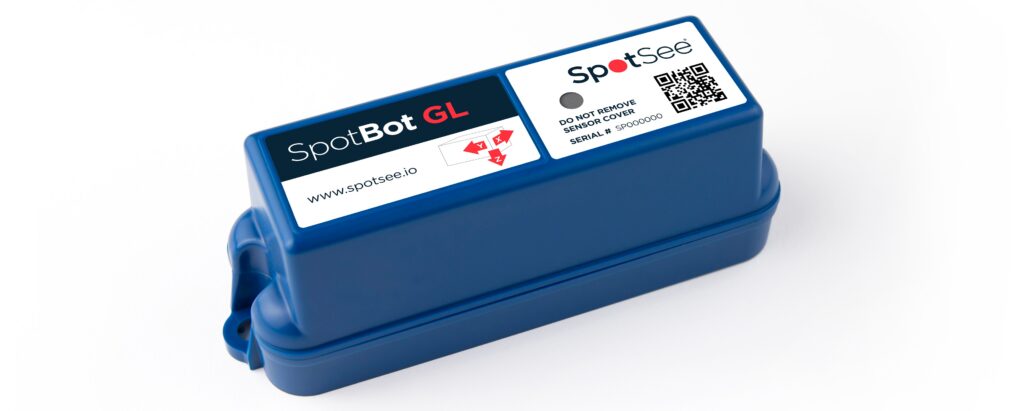
When you need more context: SpotBot GL
For higher-value equipment or more complex journeys, knowing that an exception occurred may not be enough. Teams may also need to understand when and where it happened and what other environmental conditions the shipment experienced.
SpotBot GL provides connected monitoring of tri-axial impact, temperature and humidity along with location tracking. It uses cellular networks, Wi-Fi and GPS-related location technologies to provide shipment information through the SpotSee Cloud.
This makes SpotBot GL useful when automation equipment is traveling across multiple legs, carriers or handling points. Instead of discovering a potential problem only when the equipment reaches the installation site, teams can receive alerts and see where and when an impact or environmental excursion occurred.
That additional context can make investigation more focused. If an event is recorded, teams have information that can help them determine where in the journey it happened and whether the equipment should receive additional attention when it arrives.
Importantly, SpotBot GL monitors impact, temperature and humidity, not tilt. When orientation data or more detailed impact analysis is required, a different monitoring configuration may be more appropriate.
When precision requires deeper data: ShockLog Cellular GL with ShockLog 298
Some automation shipments require a much more detailed understanding of what happened in transit.
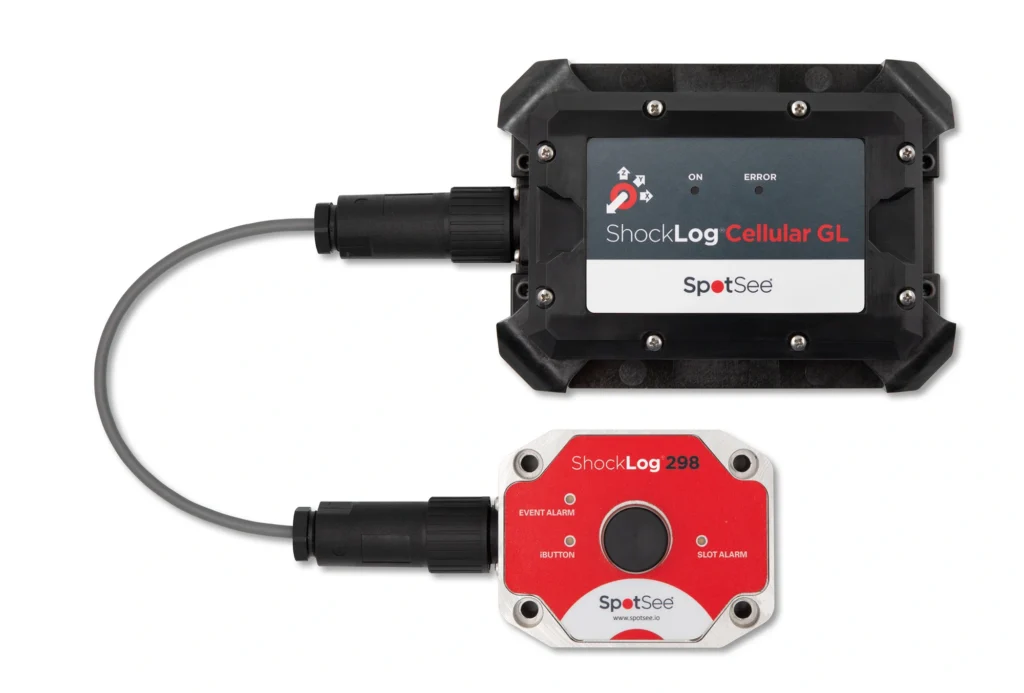
For highly sensitive, high-value or mission-critical machinery, ShockLog Cellular GL can be paired with the ShockLog 298 to provide a more advanced level of condition monitoring.
The ShockLog 298 is designed to record detailed shock and vibration data. Depending on its configuration and optional sensors, it can also capture temperature, humidity, tilt and roll. When paired with ShockLog Cellular GL, that information can be connected to real-time alerts and remote access through the SpotSee Cloud.
The combination is designed for situations where simply knowing that an impact happened is not sufficient. The ShockLog 298 can capture detailed impact event data using a tri-axial piezoelectric accelerometer, while ShockLog Cellular GL provides the connectivity needed to communicate shipment information remotely. SpotSee reports connectivity speeds up to 30 times faster than its previous 3G version.
This level of sensitivity and detail can be valuable when transporting precision automation systems where engineers need more than a pass-or-inspect signal. Detailed event information can help teams evaluate potentially damaging conditions, investigate what occurred and improve packaging, loading, routes or carrier practices over time.
SpotSee has used the same approach with other large, sensitive industrial assets. In its large power transformer case study, ShockLog 298 data was used to identify mishandling and support decisions around inspection, packaging and transportation practices.
Match the monitoring to the decision you need to make
Not every industrial robot needs the same level of monitoring.
A shipment where the primary question is whether a significant impact occurred may only require a visual indicator such as ShockWatch 2 QR. Equipment that must remain upright may benefit from TiltWatch XTR QR. Higher-value shipments moving through complex logistics networks may justify connected condition and location monitoring with SpotBot GL.
And for highly sensitive machinery where engineering teams need detailed shock, vibration and environmental information together with strong cellular connectivity, ShockLog Cellular GL paired with ShockLog 298 provides a more comprehensive record.
The important question is not how much data you can collect. It is how much information your team needs to make the right decision when the equipment arrives.
Industrial robots are designed to repeat movements with extraordinary precision. Their journey to the factory floor is rarely as controlled.
Condition monitoring helps close that gap, giving manufacturers, logistics teams and receiving sites evidence of what happened between shipment and installation so they can inspect when necessary, investigate exceptions and commission equipment with greater confidence.
—-
You might also like


