

A temperature-sensitive shipment arrives at a pharmacy. The box looks intact. The driver reports it was kept cold throughout transit. But there is no record, no log, nothing the pharmacist can scan or present to a quality reviewer. So the shipment gets rejected.
This is “return by default”: a rejection driven not by evidence of failure, but by the absence of evidence of success. It is one of the most avoidable sources of product loss in pharmaceutical last-mile logistics, and it occurs across pharmacies, clinics, and home delivery programs alike.
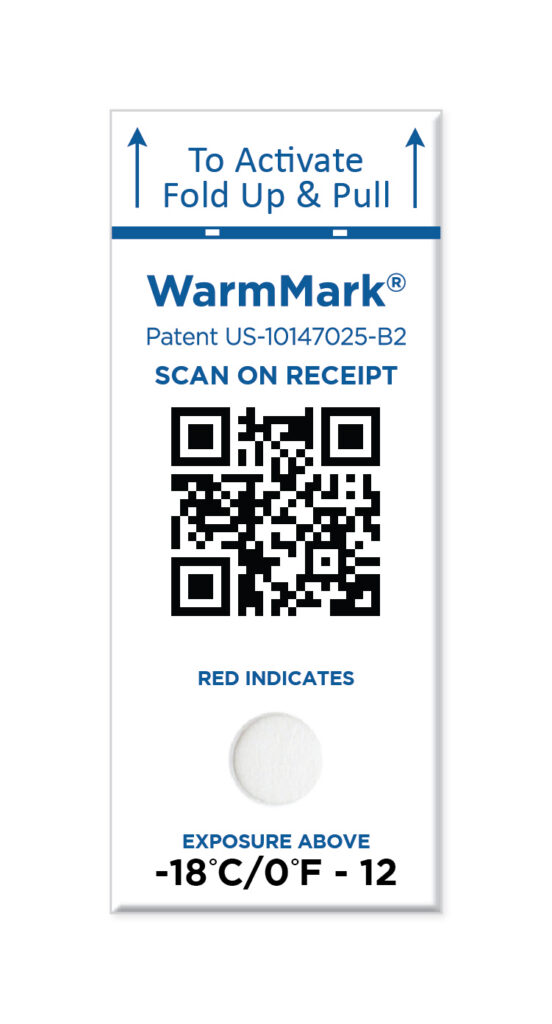
QR-enabled temperature indicators, such as WarmMark QR and FreezeSafe QR, address this problem directly by creating a retrievable evidence layer at the point of receipt.
The real cost of “return by default” is the pattern, not the product
A “return by default” rejection is not triggered by a confirmed temperature excursion. It is triggered by the inability to rule one out. When a receiving pharmacist, clinic technician, or home delivery patient cannot verify what happened to a shipment during transit, the cautious and often correct decision is to quarantine or reject it.
The individual rejection may be the right call. The pattern, however, is expensive. Across a network of last-mile stops, each unverifiable delivery represents a potential reship, a patient without medication, a customer service escalation, or a quality investigation that cannot be resolved because there is nothing to investigate. The problem compounds across routes and therapy classes, from biologics and vaccines to compounded medications and diagnostics.
Many of these rejections are avoidable. The shipment may have remained within acceptable conditions throughout transit. Without documentation, that possibility cannot be confirmed, and the cost of uncertainty is absorbed by the shipper.
Why “no scan = no proof” is the core problem
At the point of receipt, the decision logic is straightforward. A receiving professional needs to answer one question: was this shipment within acceptable temperature conditions during transit? If the answer is verifiable, a decision can be made. If it is not, the default is rejection or quarantine.
A visual indicator alone does not fully close this gap. A color change communicates that a threshold was reached, but it does not capture when the excursion occurred, for how long, where in the journey it happened, or which specific unit was affected. That contextual information matters when a pharmacist needs to defend a receiving decision, when a quality team opens a deviation review, or when a shipper disputes a carrier’s handling claim.
In regulated environments, the absence of a retrievable record is often what drives default rejection. It is not that the shipment is assumed to have failed. It is that no one can demonstrate it did not. The result is a documentation gap that visual indication alone cannot fill.
QR-enabled indicators create the evidence layer that changes the decision
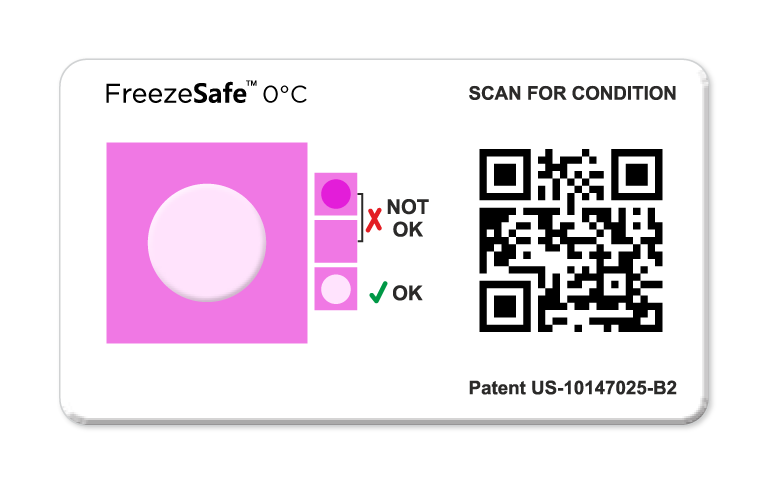
WarmMark QR and FreezeSafe QR are designed to address exactly this gap. WarmMark QR monitors ascending temperature conditions, activating when a shipment is exposed to temperatures above a defined threshold. FreezeSafe QR monitors descending temperature conditions, indicating when a shipment has been exposed to temperatures below a defined freeze threshold. Both are single-use, battery-free indicators suited for pharmaceutical last-mile applications.
The QR function changes what happens at receipt. When a receiving professional/patient scans the indicator with any smartphone, no dedicated app required, the scan captures the indicator condition along with the time, date, location, and serial number of that specific unit. That data is uploaded in real time to the SpotSee Cloud, where it becomes a retrievable, cloud-based record.
This record does several things that a visual read alone cannot. It creates a documented chain of receipt decisions that can be reviewed during quality investigations. It gives shippers visibility into where in the last-mile network documentation gaps are occurring. And it provides a defensible basis for accepting or rejecting a shipment, one that does not rely on memory, manual logging, or carrier-supplied data.
WarmMark QR is also designed to support 21 CFR Part 11 record-keeping and user access requirements, making it suitable for operations where electronic records must meet specific compliance standards.
Because no app is required, the workflow is practical for the full range of last-mile recipients. A pharmacist, a clinic technician, or a patient receiving medication at home can complete the scan with a standard smartphone. The barrier to documentation is low, and the evidence created is consistent.
Matching the right indicator to the right delivery scenario
Not every last-mile stop requires the same level of documentation. The choice of indicator should reflect what the receiving professional needs to do with the information.
For pharmacies and clinics handling regulated products, WarmMark QR or FreezeSafe QR provide cloud-based records that support audit readiness, deviation reviews, and dispute resolution. These are environments where shipment decisions may need to be defended after the fact, and where a retrievable scan record carries operational value beyond the moment of receipt.
For home delivery programs, the same QR-enabled indicators give patients and caregivers a way to verify shipment condition without relying solely on a color interpretation. A scan provides objective confirmation, which reduces uncertainty and supports patient confidence in the medication they have received.
The practical starting point is to identify which stops in your last-mile network currently generate the most “no proof” rejections. Those are the checkpoints where a QR-enabled evidence layer is likely to create the greatest operational value.
The goal is not simply to monitor temperature. The goal is to give the person making the receiving decision enough evidence to act with confidence, and to give the quality team enough documentation to close the loop.
—-
You might also like
- How one app-free scan resolves cold chain blind spots
- Ensuring safe delivery of compounded GLP-1 medications: best practices and tools
- From damage report to decision: speeding up complaint handling in high-value shipments


