

You have invested in validated packaging. You have a qualified carrier. The shipment leaves your facility within specification and arrives on time. By every internal measure, the cold chain held.
And yet the receiving team cannot confirm it. The patient does not know what to trust. The quality investigation opens anyway. A replacement ships.
This is not a temperature control failure. It is a documentation failure, and in life sciences, pharmaceutical distribution, and direct-to-patient programs, those two problems now carry nearly identical operational weight.
Compliance and documentation are not the same requirement
A shipment can remain within specification for its entire journey and still arrive with no evidence that this was the case. Temperature control and temperature documentation are related, but they are not the same thing. Confusing them is one of the most common structural gaps in cold chain assurance.
Temperature control is about maintaining the right conditions during transit: validated packaging, qualified carriers, appropriate thermal protection. Temperature documentation is about being able to prove that those conditions held, at the moment someone needs to make a decision.
The concept of evidence at receipt is distinct from temperature control in transit. A shipment can be perfectly managed upstream and still arrive without any receipt-level record. When that happens, the absence of documentation creates the same downstream burden as an actual temperature excursion: investigations open, decisions stall, and product confidence erodes.
This is not a failure of intent. Most organizations invest seriously in packaging and carrier qualification. The gap is structural: documentation is treated as a logistics function rather than a quality deliverable at the final hand-off.
Receiving teams are increasingly being asked to prove what they cannot see
The receiving moment has changed. It is no longer just a delivery step. For teams handling temperature-sensitive pharmaceuticals, biologics, or clinical trial materials, receipt is now a decision point: accept, reject, or escalate. And that decision depends on available evidence, not just physical condition.
This shift is being felt across the industry. Quality teams, accrediting bodies, and internal SOPs are increasingly asking receiving staff to document condition at the point of delivery, not just note that a package arrived. The question is no longer “did it arrive?” but “can you show what condition it was in when it got here?”
In home delivery and decentralized receiving environments, the challenge is more acute. The person at the point of receipt is often a patient, a caregiver, or a non-specialist who cannot interpret carrier data or temperature logs. What they can do is read a clear, visual indicator. When no such indicator is present, they have no basis for a confident decision.
The operational consequence is predictable. Without evidence, teams default to caution. Reships are triggered. Quality investigations open. Customer service escalations follow. Many of these are avoidable, not because the shipment failed, but because no one could confirm that it did not.
Home delivery and direct-to-patient programs have shifted where documentation risk lives
Traditional cold chain documentation was designed for controlled receiving environments: hospital pharmacies, distribution centers, clinical sites. These are places with trained staff, established SOPs, and the infrastructure to interpret data logs and carrier records. Documentation gaps in these settings are manageable because the people involved know how to investigate them.
Direct-to-patient and ship-to-home programs operate differently. The final hand-off now occurs outside controlled environments, at a patient’s door or a remote clinical site, often without trained receiving personnel. The documentation gap that was manageable in a hospital pharmacy becomes a recurring exposure when it is replicated across thousands of home deliveries.
For compounding pharmacies, this is not a future risk. It is a current operational reality. As home delivery volume grows, the absence of receipt-level evidence becomes a compliance exposure that surfaces repeatedly: in patient inquiries, in quality investigations, and in the growing expectations of accrediting bodies that want to see documented, defensible shipment decisions.
The same dynamic is visible in decentralized clinical trials and specialty pharmaceutical distribution. As these programs expand, the point of receipt moves further from the center of the distribution network, and the need for self-contained evidence at delivery becomes more critical, not less.
Audit readiness and chain of custody require evidence that exists at the moment of receipt
Audit readiness is not retrospective. It depends on documentation that was created at the time of the event, not reconstructed afterward from memory, carrier logs, or shipping records. When a quality investigation opens six weeks after a delivery, the question is not whether the carrier performed well. It is whether there is a contemporaneous record of condition at the point of receipt.
Chain of custody, as a concept, extends to the final delivery point. Each hand-off in the chain requires a documented condition read, not just the upstream legs. A well-documented upstream journey does not compensate for an undocumented final delivery. In fact, the contrast can make the gap more visible during an audit: every step is documented except the one that matters most to the patient.
Quality investigations become significantly harder to close when the last leg of the chain has no evidence. Teams are left reconstructing what probably happened rather than confirming what actually did. This creates ambiguity that is difficult to resolve, costly to investigate, and hard to defend.
In life sciences and specialty pharma, demonstrating control and consistency throughout distribution is an expectation, not a differentiator. Regulatory and accreditation frameworks increasingly emphasize the ability to show that appropriate handling occurred at every stage, including delivery. Organizations that cannot produce receipt-level evidence are not failing to go above and beyond. They are failing to meet a baseline expectation.
No evidence at receipt creates the same operational problem as a real excursion
This is the point that most cold chain planning does not account for. When a receiving team cannot confirm condition, they must act as if the worst case is possible. That means the same workflow, the same investigation, and often the same replacement cost, regardless of whether the shipment actually failed.
The operational equivalence is real. A confirmed temperature excursion and an unconfirmed shipment trigger the same response: escalation, investigation, replacement decision. The difference is that a confirmed excursion at least closes quickly. An unconfirmed one stays open until someone can gather enough evidence to make a call, which may never happen.
This is the practical argument for documentation at receipt. It is not about adding process. It is about avoiding the cost of uncertainty. A clear, readable condition record at delivery allows the receiving party to make a confident decision: accept, flag for review, or reject. That decision, documented at the point of receipt, closes the loop.
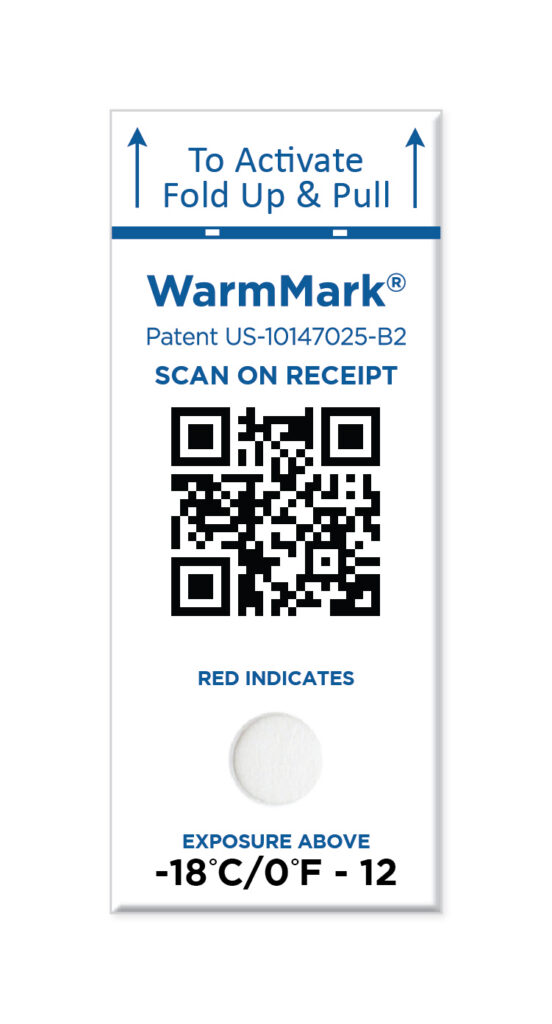
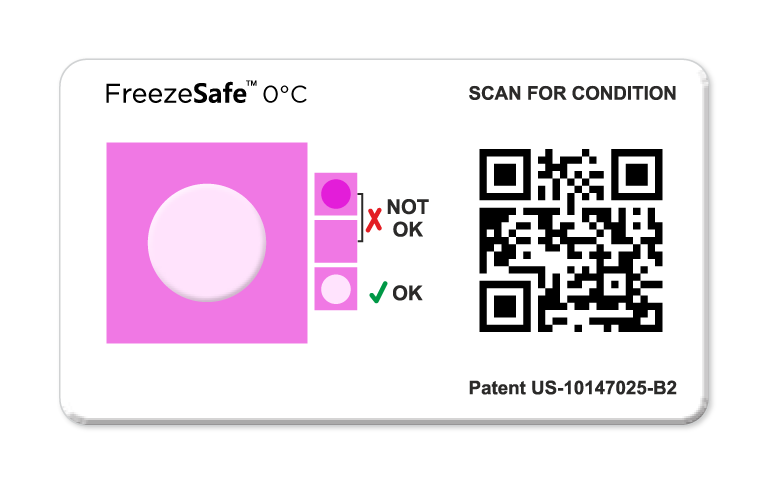
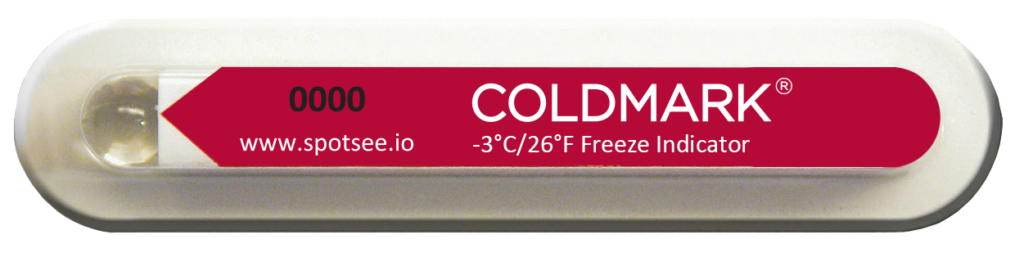
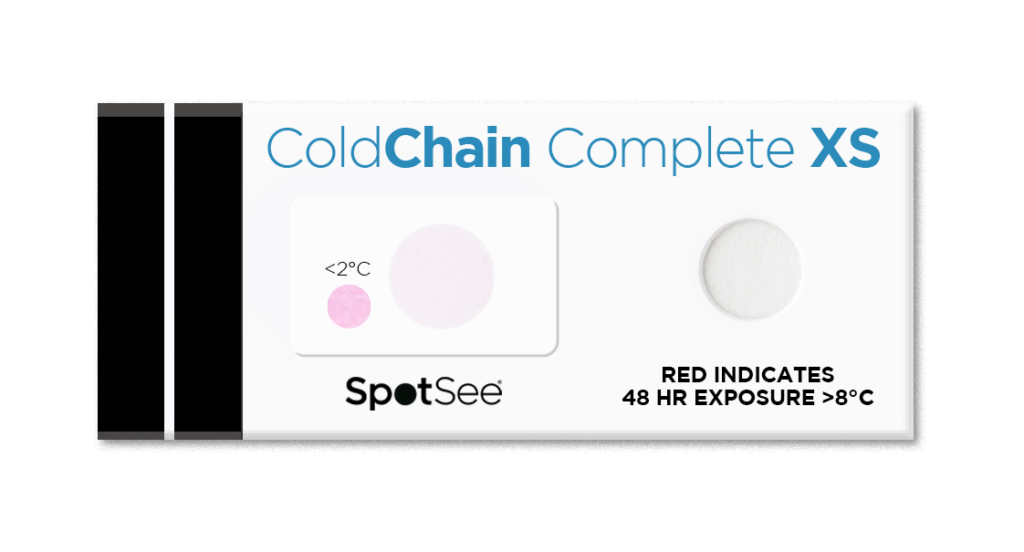
A good read at delivery is a decision-enabling tool. It is not a substitute for validated packaging or data loggers. It is the final layer of a layered monitoring approach, the one that makes the decision at the last hand-off possible without an investigation. WarmMark QR, FreezeSafe QR, ColdMark, and ColdChain Complete are built for exactly this moment: a clear, documented read at the point of receipt, without requiring additional infrastructure or trained personnel.
Building documentation into the receiving moment, not after it
A documentation-forward receiving workflow does not have to be a complex one. The goal is straightforward: create a condition record at the point of delivery that is clear enough to support a decision and durable enough to support an audit.
In practice, this means placing an indicator or electronic monitoring device on the shipment that provides a readable condition record at receipt. For temperature-sensitive pharmaceutical shipments, that record needs to answer the question the receiving party is actually asking: was this shipment within acceptable range when it arrived?
QR-enabled indicators such as WarmMark QR and FreezeSafe QR allow a receiving party to scan and log condition at delivery without additional infrastructure or specialized training. The role of a receipt-level indicator is to close the documentation gap at the final hand-off, the one point in the cold chain where evidence has historically been weakest and where the consequences of its absence are most directly felt by the patient, the pharmacy, and the quality team.
This is not a new system to manage. It is a layer that fits into existing cold chain workflows, one that makes the decision at receipt possible without adding complexity.
The question has changed
For organizations managing direct-to-patient shipments, clinical trial distribution, or specialty pharmaceutical fulfillment, the question is no longer only whether temperature was maintained. It is whether the team at the point of receipt can confirm it, document it, and act on it.
That distinction is where the next generation of cold chain assurance is being built. The shipments that create the most operational burden are rarely the ones that failed. They are the ones where no one could prove they did not.
—
You might also like


