

News

Shipment alerts are easy. Designing who acts next is the hard part
Supply chain monitoring only becomes operationally useful when the team has already agreed who will act at the moment an excursion or shock event is flagged. Without that upfront design, connected monitoring often creates inconsistent hand-offs, unclear escalation...

Ensuring Safe Delivery of Compounded GLP-1 Medications: Best Practices and Tools
Key Takeaways GLP-1 storage temperature: Compounded GLP-1 medications must be refrigerated between 2°C and 8°C (36°F–46°F). Exposure above 8°C risks degrading the peptide structure and reducing efficacy. Cold chain shipping is the end-to-end process of maintaining...

Modern Challenges and Opportunities in Rail Transportation
Explore the challenges and opportunities in rail transportation and how Thermax® Temperature Indicators give you an edge. Key Takeaways: The transportation sector accounts for 29% of global CO2 emissions. Rail transport contributes just 2%, making it the...

The Many Applications of Liquid Crystal Technology
Liquid crystal technology is used daily, but its applications extend far beyond TVs and smartphones to protect people and products. Key takeaways: Thermochromic liquid crystals (TLCs) change color reversibly with temperature, transitioning from black through red,...

Boost Patient Safety and Reduce Waste with Thermochromic Labels
Get swift visual assurance that your products have maintained the proper temperature Key Takeaways: Storing, shipping, and distributing temperature-sensitive medical products is risky. Some vaccines and drugs break down molecularly if kept at improper temperatures....

Navigating Temperature Sensitivity: Effects of Temperature Change on Biologic Drugs
Temperature Change and Biologic Drugs: Cold Chain Monitoring Guide Key Takeaways: Why are biologic drugs so sensitive to temperature and impact? What is the impact of temperature fluctuations on biologic drugs? How can pharmaceutical temperature monitoring help...

How much shipment reporting do you actually need?
Most teams don’t have a monitoring problem. They have a reporting expectation problem. If alerts arrive but no one can act during transit, they become noise. If the only information shows up at delivery, it may not be enough to resolve disputes or improve packaging or...

Unit-level heat exposure: turning peak temperature into evidence
Your process chart can look perfect and still fail the simplest audit question: what did this specific unit actually experience temperature-wise? Process documentation can be complete, validated and well controlled, yet still fall short when the question shifts from...

Solving the Thursday shipment problem in cold chain logistics
A Thursday shipment is not inherently a problem. The real risk is allowing Monday receiving decisions to depend on incomplete evidence and inconsistent judgment. The practical stance is simple. You do not need to eliminate Thursday shipping. You need a weekend-proof...

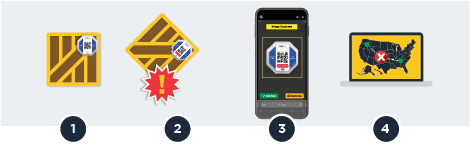
Introducing ShockWatch Label QR: Visual impact indication with digital traceability
ShockWatch Label QR takes a familiar clear-to-red impact indicator and adds digital traceability at the moment it matters most, at receipt. A smartphone QR scan creates a cloud-stored, item-level record tied to that specific indicator, with no app required. For...
SpotSee Expands QR-Enabled Monitoring Portfolio
New Connected Indicators Detect Shock, Tilt and Freeze SpotSee, a global leader in condition monitoring and supply chain visibility solutions, today announced the launch of three new QR-enabled indicators: FreezeSafe™ QR, TiltWatch® XTR QR and ShockWatch® Label QR....

Freeze monitoring at critical hand-offs: choosing the right signal for implants and transplant logistics
In transplant and implant logistics, the constraint is not only visibility. It is time. Teams often cannot pre-condition or pre-activate a device before use, which means many freeze indicators are not operationally usable at the moment they are needed. Validated...

WarmMark QR in the last mile: turning receipt checks into evidence
Cold chain monitoring often breaks down at the last-mile hand-off because the receiving check is not captured as evidence. If a clinic, laboratory, pharmacy or patient is asked to make an accept or reject decision at receipt, the workflow should also produce a clear,...
Choosing the right freeze temperature indicator for life science cold chain logistics
You’re shipping a freeze‑sensitive oncology therapy drug to a specialty pharmacy. The packaging is validated, and you’ve done everything “by the book”, but you still need an operationally simple way to flag potential temperature excursions during distribution, and you...

USP temperature requirements in pharma logistics and how pharmacies support compliant ship-to-home delivery
USP temperature definitions are not new, but they are being referenced more directly during investigations, audits, and exception management. As a result, pharmacies and cold chain teams are increasingly expected to capture consistent evidence at receiving and...

Why cold chains don’t need more data. They need better evidence.
Key takeaway: In cold chain monitoring, the recurring gap is not lack of data, it is missing, retrievable evidence at receiving and hand-offs. QR-enabled indicators create a simple evidence layer that documents a good read or bad read, when and where it was observed,...

Visual evidence meets digital records: The role of scan-on-receipt in last-mile logistics
Last mile is where cold chain compliance becomes personal. A clinic, lab, pharmacy counter, or patient opens the box and has to decide what happens next. Visual indicators are effective at showing a clear good read or bad read at receipt, enabling fast disposition...
SpotSee Partners with Parsyl to Offer Insurance Incentives to Shippers Monitoring Goods
SpotSee customers can qualify for an immediate 5% discount on their insurance costs with Parsyl DALLAS, March 09, 2026 -- SpotSee, a global leader in shipment condition monitoring and visibility solutions, today announced a partnership with Parsyl, a data-powered...
How to choose the right temperature monitoring solution for cold chain decisions?
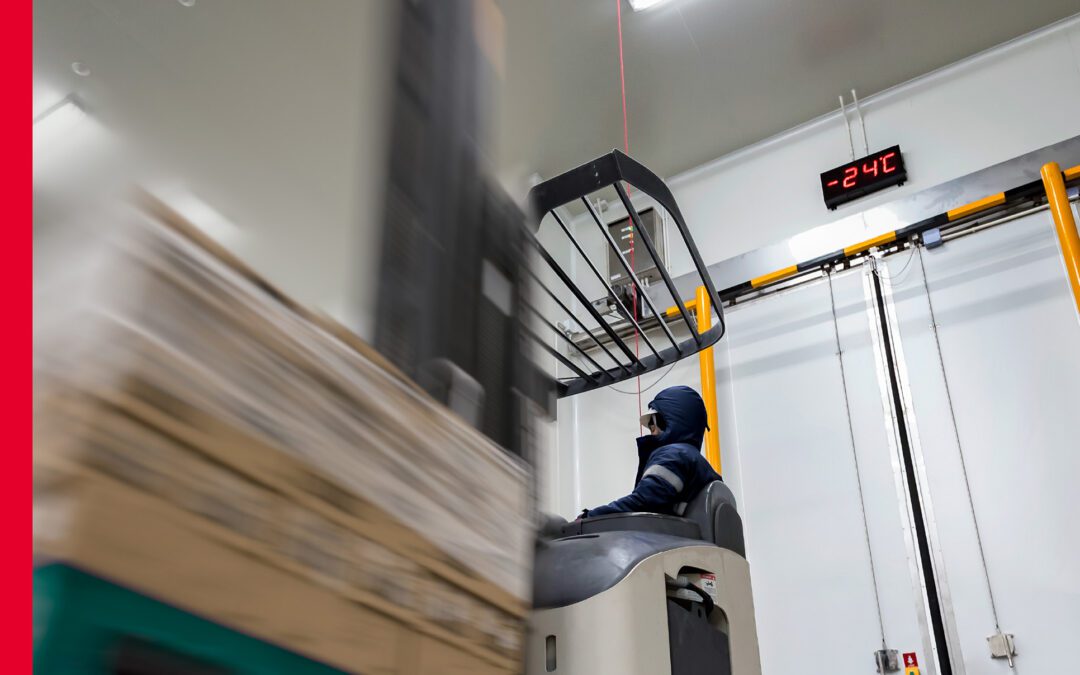
Cold chain teams already understand their products, lanes, and validated packaging. The hard part is selecting monitoring that creates operational clarity at receipt and at hand-offs, without adding data that cannot be acted on in the moment. The risk of poor...
SpotSee and Controlant Announce Strategic Collaboration to Expand Shipment Visibility and Last-Mile Proof for Life Sciences
DALLAS and REYKJAVÍK, Iceland — March 2, 2026 — SpotSee and Controlant today announced a strategic collaboration designed to help life sciences organizations expand shipment visibility, strengthen proof of condition and scale monitoring programs more efficiently...


