

Damage doesn’t announce itself at the loading dock. It shows up later, during commissioning or the first power-on, when a failed drive or a cracked chassis turns a deployment timeline into a claims conversation.
Data centers are being built faster than at any point in history. Hyperscalers, colocation providers, and enterprise IT teams are all racing to add capacity, which means millions of dollars’ worth of server infrastructure are moving through supply chains every week.
The problem is that a server rack is not a pallet of standard freight. It is precision equipment, including drives, motherboards, and cooling systems, all of which can be sensitive to shock, vibration, temperature, and humidity. Once it leaves the loading dock, many shippers have limited visibility into what happens to it. By the time damage is discovered at delivery, the delay, the dispute, and the cost may already be locked in.
SpotSee offers two purpose-built tools for this challenge: the ShockWatch 2 QR impact indicator and the SpotBot GL connected condition monitor. This article explains why server rack shipments carry elevated risk and how a layered monitoring approach can help teams protect hardware, support claims, and maintain deployment schedules.
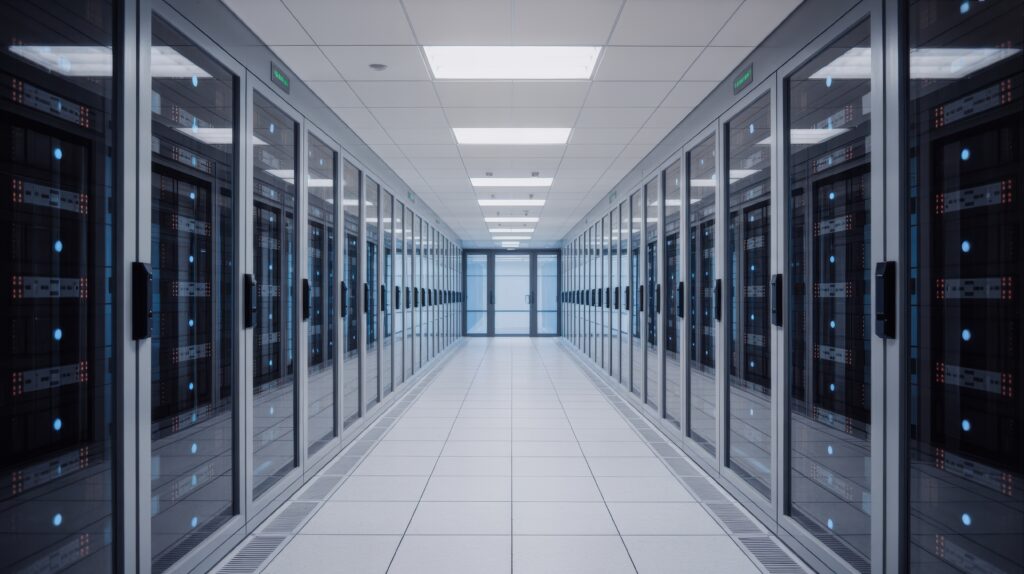
The data center market is growing fast, and so is the pressure on hardware logistics
The scale of current data center investment is significant. Hyperscaler buildouts, AI infrastructure programs, and edge computing rollouts are all driving sustained demand for server hardware. Each new facility requires racks of servers, switches, and storage arrays to be procured, configured, and delivered, often to multiple sites simultaneously and on tight commissioning schedules.
This growth translates directly into logistics pressure. More shipments moving through more lanes with more handler touchpoints means more opportunities for something to go wrong. Server racks are heavy, they are often shipped pre-configured, and they move through freight environments that were not designed with precision electronics in mind.
The financial stakes make every damaged delivery disproportionately costly. A single rack can represent tens of thousands of dollars in hardware. When damage delays a deployment, the operational impact extends well beyond the replacement cost. Downtime, rescheduled installation crews, and SLA exposure can all follow from a single transit event that went unmonitored.
Server racks are among the most damage-vulnerable cargo in commercial shipping
The physical characteristics of server racks create real exposure during freight movement. A fully loaded rack combines significant weight with components that are sensitive to impact, vibration, temperature change, and humidity. Hard drives, in particular, are vulnerable to G-force events. Motherboards and expansion cards can be damaged by vibration that falls well below the threshold a carrier would consider unusual.
Standard freight handling is not calibrated to the tolerance levels of enterprise IT hardware. Forklifts, loading ramps, and multi-leg transfers all introduce risk. Temperature and humidity variations in transit can affect connectors, thermal interface materials, and storage media in ways that may not be immediately visible at receiving.
Without condition monitoring in place, the accountability gap is significant. When a rack arrives with internal damage, it is often impossible to determine when or where the event occurred, which carrier leg was responsible, or whether the packaging performed as intended. This makes claims difficult to substantiate and prevention harder to plan. Standard carrier liability may not cover the full replacement cost, deployment delay, or operational impact of damaged enterprise server hardware, leaving the shipper or receiver to absorb costs that were avoidable.
Visual shock indicators give every shipment a tamper-evident damage record
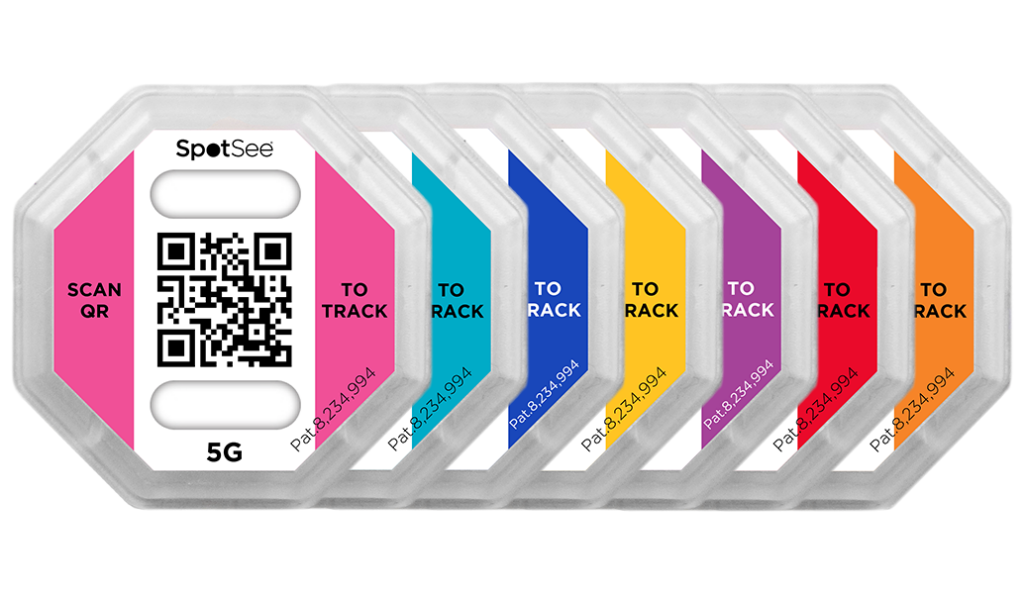
The ShockWatch 2 QR is a single-use, battery-free impact indicator that provides a clear visual alert when a shipment experiences an impact above the selected G-force threshold. It requires no infrastructure, no app, and no power source. It attaches to the outside of the packaging and is visible to anyone who handles or receives the shipment.
The QR code adds a digital layer to that visual record. Any smartphone can scan the indicator to capture the impact condition, the time and date of the scan, a GPS-based location, and a unique serial number. Each scan uploads automatically to the SpotSee Cloud, creating a timestamped, location-stamped record that can support receiving decisions, quality documentation, and carrier claims.
There is also a behavioral dimension to visible monitoring. Research and field data associated with SpotSee’s impact indicators suggest that visible indicators on packaging are associated with a 40 to 60 percent reduction in damage in industrial and high-value logistics environments. The mechanism is straightforward: when handlers can see that a shipment is being monitored and that a bad read will trigger a documented exception, handling discipline tends to improve. The indicator does not just record what happened. It changes what happens.
The ShockWatch 2 QR is available in seven G-force thresholds, color-coded for easy identification at receiving. Selecting the right threshold for the equipment being shipped is an important step in making the indicator useful rather than decorative.
Learn more about the ShockWatch 2 QR and select the threshold that fits your server rack shipments.
For high-value server rack shipments, connected monitoring closes the visibility gap
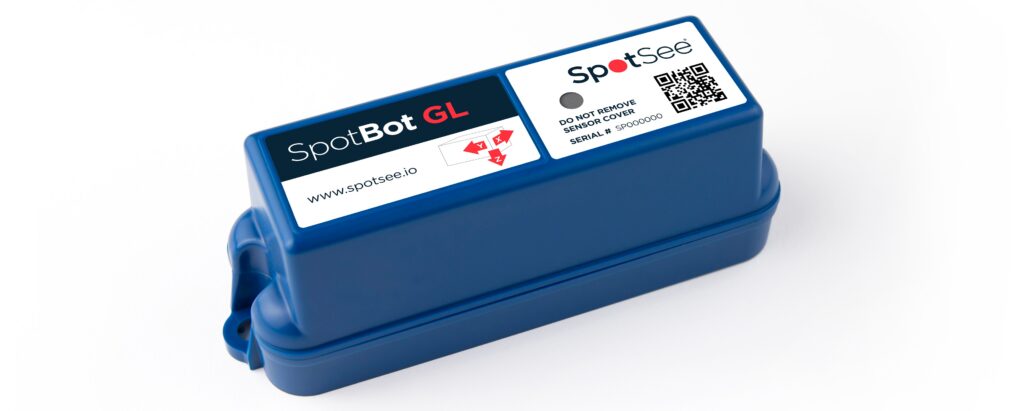
For shipments where a visual indicator at receiving is not enough, the SpotBot GL provides continuous, connected condition monitoring across the entire transit journey. It tracks tri-axial impact from 3.5 to 100G, temperature, and humidity, and transmits data via 4G LTE and WiFi to the SpotSee Cloud.
This means that rather than discovering a problem at delivery, teams can receive immediate alarm alerts when an event occurs, see where the shipment is, and review a full event log that shows exactly when and where an impact or environmental excursion happened. For long-haul, multi-leg, or high-value deployments, this level of visibility changes how teams respond. An alert during transit can trigger an early inspection, a carrier escalation, or a decision to hold the shipment before it reaches the installation site.
The SpotBot travels with the rack. It is compact, mounts via screw, adhesive, or optional magnetic feet, and runs on a lithium battery pack with a service life that scales with the reporting interval. At a four-hour reporting interval, for example, battery life can extend to approximately 1.8 years, making it suitable for extended deployments or multi-shipment programs.
The SpotSee Cloud integration also supports carrier performance analysis over time. Teams managing large-scale data center buildouts can use event logs across multiple shipments to identify which lanes, carriers, or handling points are generating the most impact events, and adjust procurement or logistics decisions accordingly.
Learn more about the SpotBot GL and its monitoring capabilities for server rack shipments.
Condition monitoring helps reduce disputes and improve response
The cost of monitoring a server rack shipment is small relative to the value of the hardware being protected. Against the replacement cost of a damaged rack, the deployment delay costs, and the administrative burden of a contested claim, the cost of the monitoring devices is not high. A tiered approach tends to work well in practice. The ShockWatch 2 QR provides a visible, tamper-evident record at receiving for every server rack shipment, giving teams the documentation they need to accept, quarantine, or escalate at the point of delivery. For the highest-value shipments, the longest lanes, or the most complex multi-leg deployments, the SpotBot adds connected visibility and real-time alerting that makes it possible to act before the rack reaches the installation site.
Together, the two tools address different moments in the same problem. The ShockWatch 2 QR answers the question at receiving: was this shipment handled within tolerance? The SpotBot GL answers the question in transit: where is this shipment now, what has it experienced, and does anything require action?
For data center operators managing high volumes of server rack procurement, building condition monitoring into standard receiving and shipping procedures is a straightforward way to reduce the cost and friction of in-transit damage, support carrier accountability, and protect deployment timelines.
Visit the SpotSee shop to select the right impact threshold for your server rack shipments, or contact SpotSee to discuss a monitoring program for your data center supply chain.
—-
You might also like


