

The choice between irreversible and reversible indicators is not a technical preference. It is a decision about what you need the indicator to do: permanently prove that an exposure occurred, or minimum/maximum temperature was reached, or give your team real-time visibility so they can act in the moment.
Most teams pick an indicator based on what they have always used. If the product came with a temperature indicator, they reorder the same one. If a carrier damaged a shipment and someone attached an indicator, that becomes the default.
The problem is that irreversible and reversible indicators answer entirely different questions. Using the wrong type does not just create gaps in monitoring. It can leave you without the documentation needed for a claim, or with a permanent record of a condition that was never actually a problem.
What irreversible indicators are actually for: proof, not just detection
An irreversible indicator creates a permanent, tamper-evident record of whether a defined threshold was met/exceeded. Once it activates, it stays activated. That permanence is not a limitation; it is the point.
Because the reading cannot change after the fact, it is defensible in audits, claims, and hand-off decisions. A recipient at the end of a shipment can read the indicator independently, without relying on the shipper’s word or a data logger that could have been reset.
This matters most at transitions: when a product changes hands, when a shipment moves between carriers, or when a receiving team needs to make an accept or reject decision without access to upstream handling records. Regulations such as 21 CFR Part 11 require traceable, unalterable condition records for pharmaceutical products. Irreversible indicators are designed to support that requirement.
What reversible indicators are actually for: real-time process visibility
A reversible indicator changes color as temperature changes and returns to its original state when conditions normalize. It is designed to show the current state, not to record history.
That distinction matters operationally. In a food preparation workflow, a laboratory procedure, or a maintenance check, the question is often not “did this ever exceed a threshold?” but rather “is this at the correct condition right now so I can move to the next step?” A reversible indicator answers that question directly and continuously.
Because the reading can revert, reversible indicators are process-control tools, not audit trails. If a team tries to use them as proof of exposure, a documentation gap can occur: by the time someone reviews the indicator, the reading may have already returned to normal. For any situation where the condition record needs to outlast the process step itself, a reversible indicator is the wrong tool.
Scenario 1: pharmaceutical shipment to a pharmacy
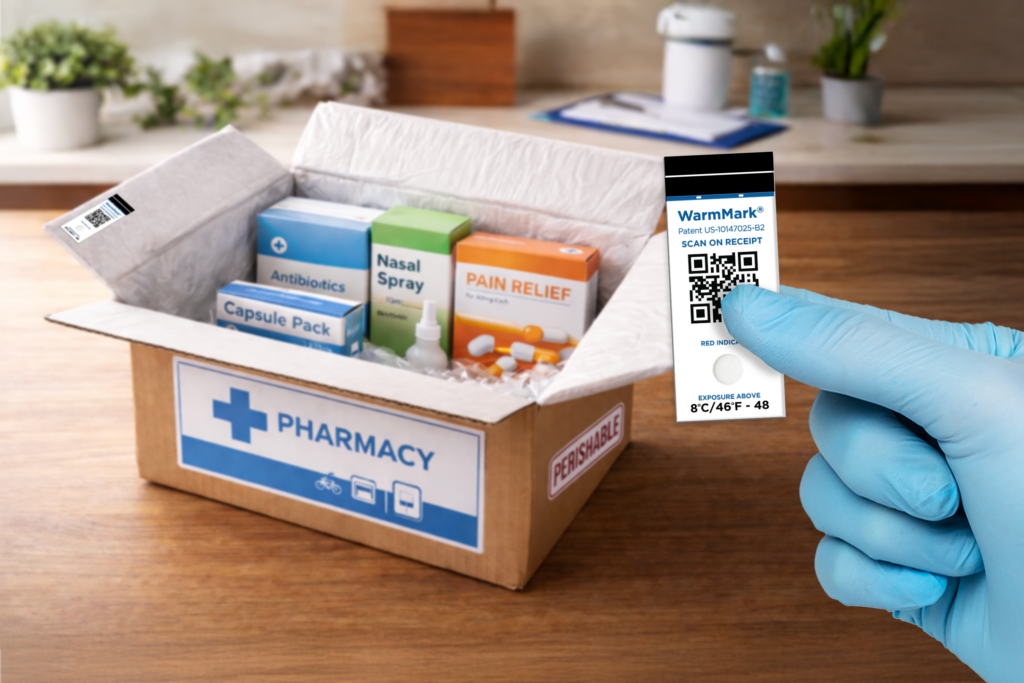
Consider a temperature-sensitive medication shipped to a pharmacy. A temperature excursion during transit cannot be undone, and the receiving pharmacist cannot accept a product whose cold-chain integrity is in question without documentation.
WarmMark QR is an irreversible temperature indicator designed for exactly this moment. When the shipment exceeds its rated threshold, the indicator changes permanently from white to pink or red. It cannot revert. The pharmacist scans the QR code on arrival and transmits time, date, location, and serial number information to SpotSee Cloud, with no app required.
This is the irreversible use case in full: independent verification at hand-off, a cloud-backed audit record, and support for 21 CFR Part 11 traceability requirements. The receiving decision is documented the moment it is made.
Scenario 2: high-value equipment handling
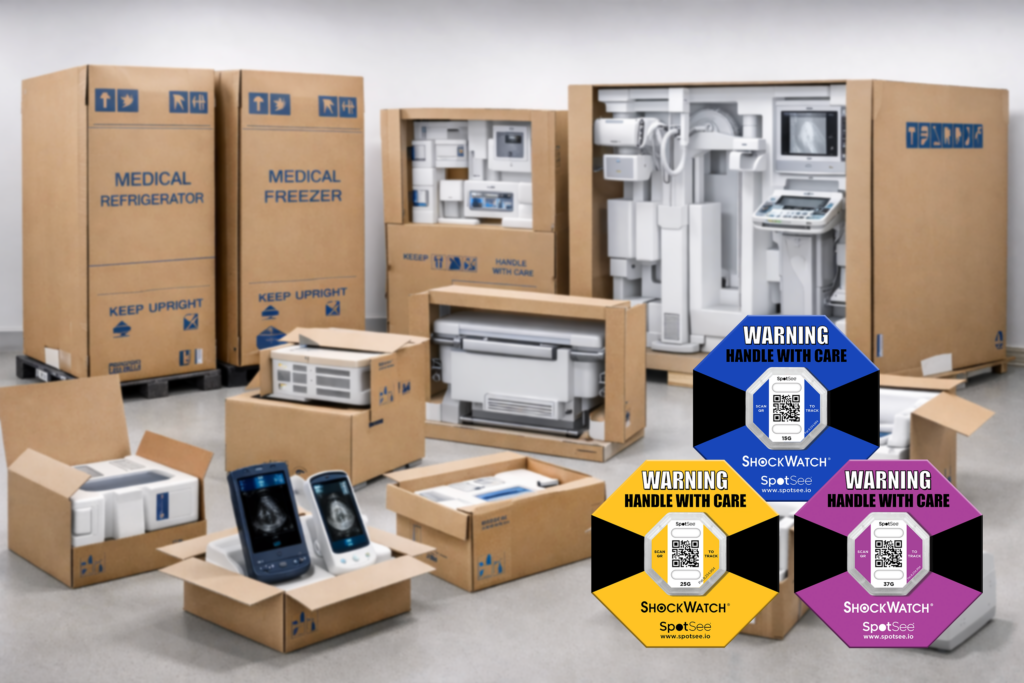
High-value equipment such as medical devices, industrial machinery, and precision instruments can sustain hidden damage from a single impact event. That damage may not become visible until installation or first use, at which point tracing the cause becomes difficult and the claim window may have closed.
ShockWatch 2 QR activates permanently when an impact exceeds its selected threshold. It cannot be reset. The visible indicator is present throughout transit, which itself influences handling behavior: when handlers know a shipment is monitored, handling practices tend to improve.
At delivery, a QR scan records activation status, time, date, and GPS location in the SpotSee Cloud, creating documented evidence for investigations and claims while supporting lane-level performance analysis. The receiving team does not need to reconstruct what happened. The record is already there.
Scenario 3: process verification in food preparation and manufacturing
In a kitchen, laboratory, or manufacturing environment, the question is different. It is not “did this product experience an excursion during shipping?” It is “has this surface, component, or batch reached the correct temperature so we can confirm it is ready for the next phase?”
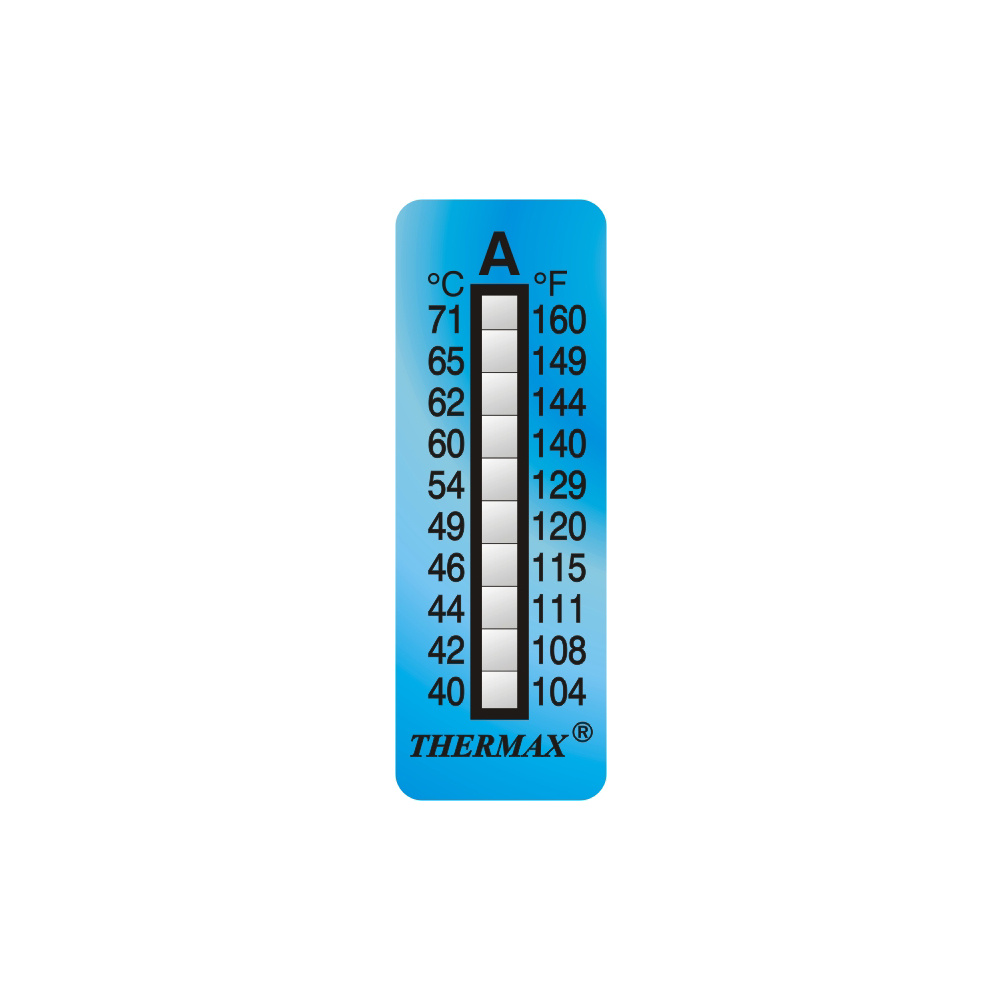
Thermax multi-level strips show which temperature thresholds have been reached on a surface or component. Each element changes permanently when its rated temperature is exceeded, providing a clear visual record of peak temperature achieved during a process step.
For a food preparation team confirming that a cooking or holding step reached a safe temperature, or a maintenance team verifying that a curing or bonding process completed correctly, Thermax provides a simple, attachable confirmation that the required condition was met. Personnel can check at a glance whether the product is ready and safe to advance to the next phase, without additional equipment.
Because Thermax is irreversible, it is appropriate when a permanent record of peak temperature is needed, for example as part of a quality check, a safety sign-off, or a production record. If only real-time, in-the-moment visibility is required and no retained record is needed, a reversible indicator is the more practical choice.
Three questions before you choose
The right indicator type follows from the right question. Before selecting a product, ask:
- Does someone outside your team need to verify the condition independently? If yes, choose an irreversible indicator.
- Does the reading need to survive a hand-off, an audit, or a claims process? If yes, choose an irreversible indicator.
- Do you need to know the current state during an active process, with no documentation requirement afterward? If yes, a reversible indicator is the right fit.
Match the indicator type to the question you need it to answer: proof of exposure, or visibility of current conditions. Then select the product that best supports that requirement.
—-
You might also like


